
Portland,explained.
Every decision Portland makes should start from facts anyone can check. We're building the institution that makes that possible: we open up the public record, source it, and turn it into tools anyone can use for free. Philanthropy and paid work cover the cost, and all of it goes toward a better Portland.
- 8
- free public tools
- 316
- parks, every one mapped
- 5,275
- downtown parcels
- 134
- documents behind one school budget
Portland has a new form of government, a half-empty downtown, and a school budget to cut. All three get decided on a public record most people never read.
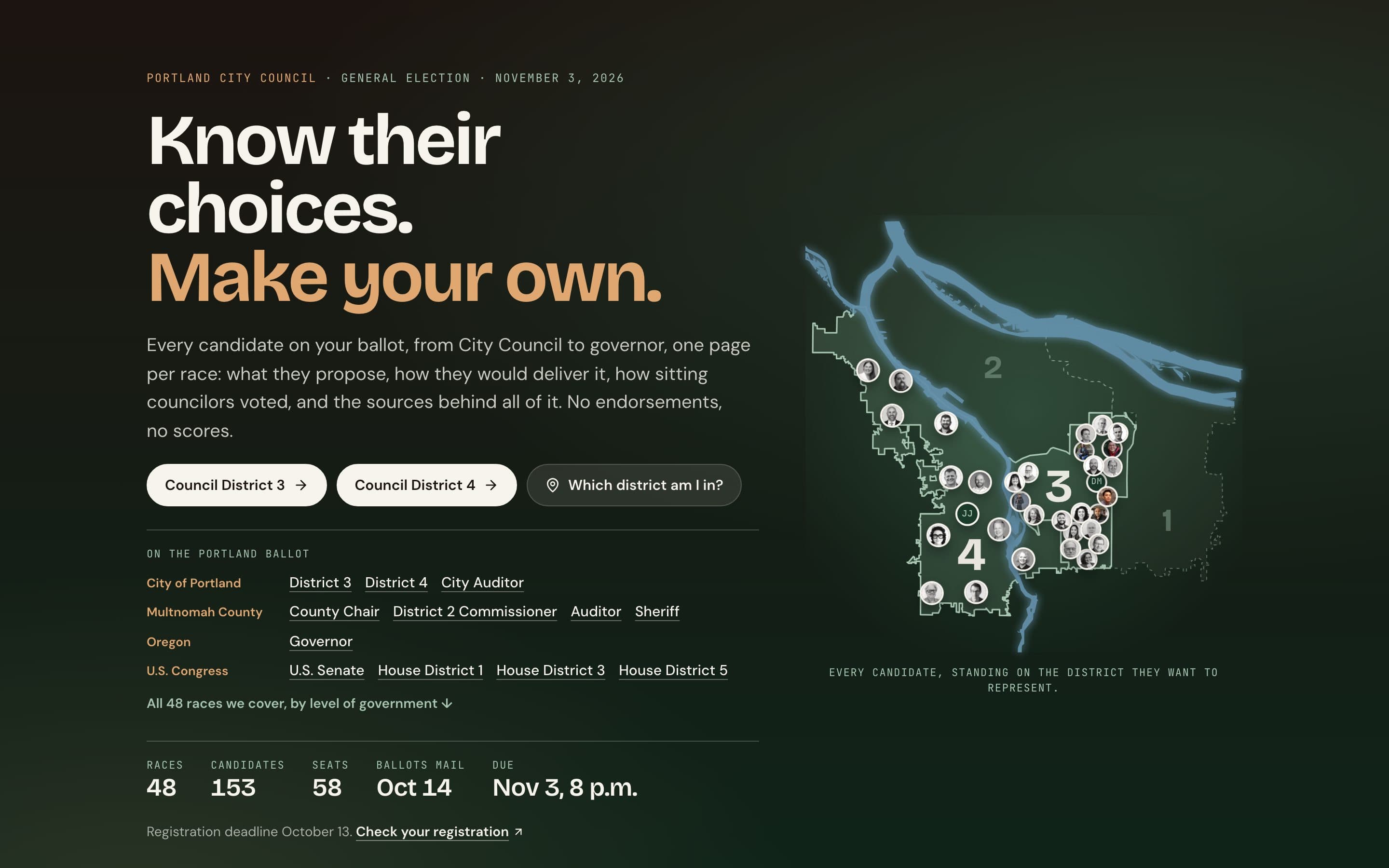
Who’s on your ballot, and what they would do.
Our free, nonpartisan voters’ guide puts 153 candidates in 48 races side by side, from City Council to governor, with what each one proposes and a source on every line. No endorsements.
- Register by
- Oct 13
- Ballots mail
- Oct 14
- Due
- Nov 3, 8 p.m.
Start here.
For residents
Use the tools. They're free.
There is no account to make and nothing to pay. Eight tools, all built from public records, and every number links back to the document it came from.
Eight tools, all free, all built from public records.
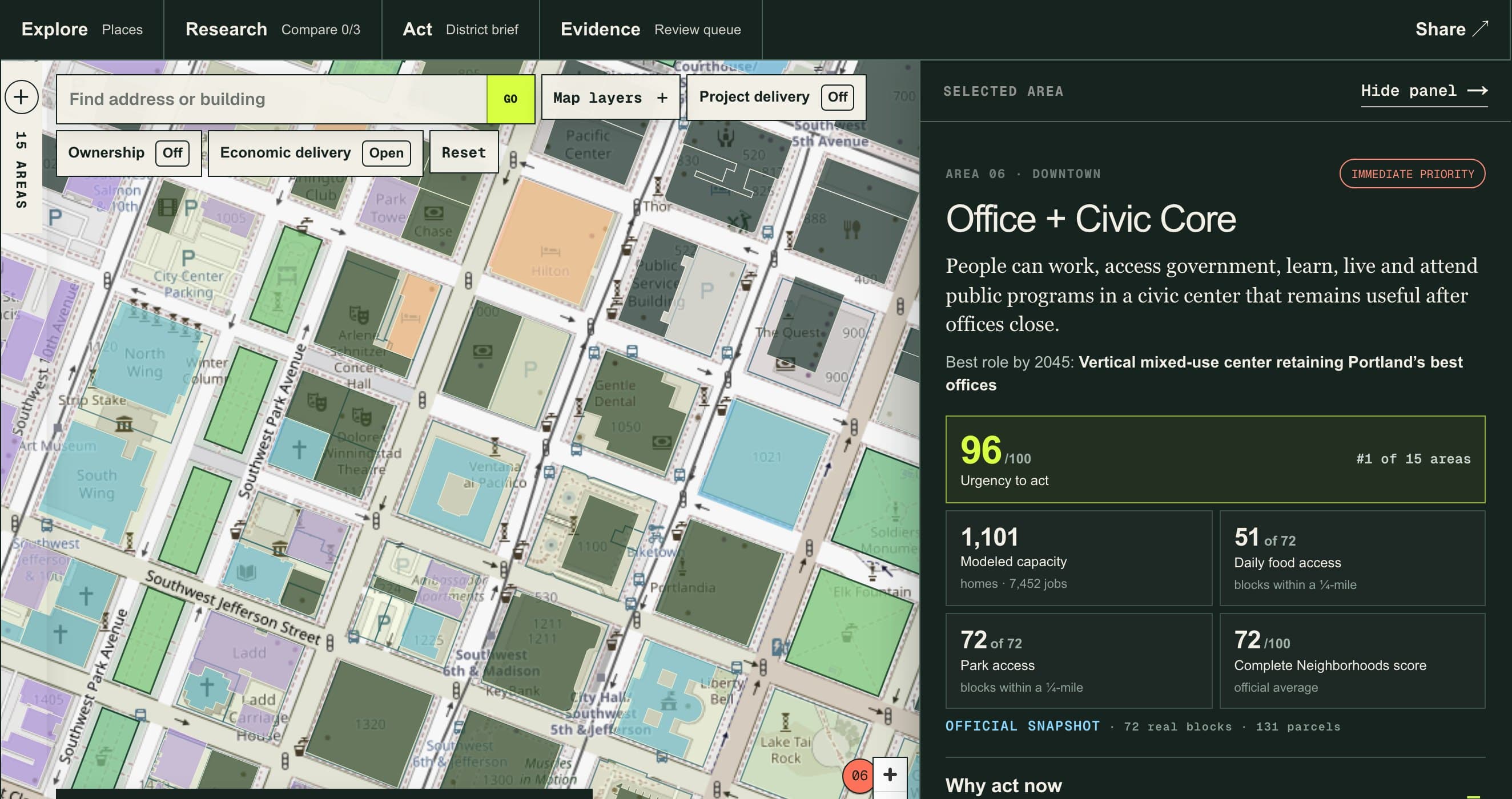
Portland Possible
What if downtown worked for everyone?
Every parcel, building, and block in the city center, what each could become, and the coordinated moves it would take.
Open
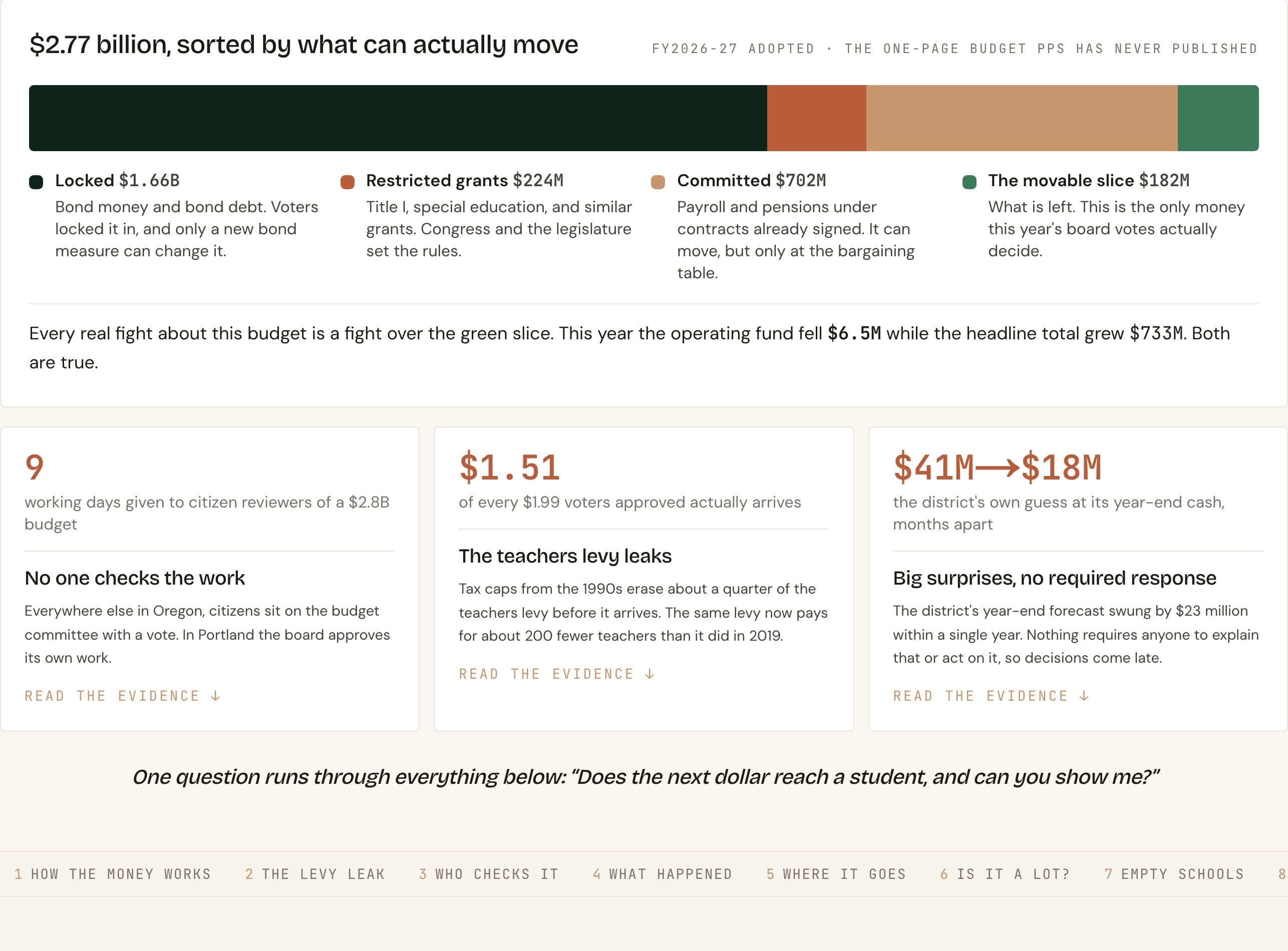
Deep-dive · The PPS budget
Where the next dollar goes.
A $2.77 billion budget sorted by what can actually move, and ten decisions the school board could make.
Open
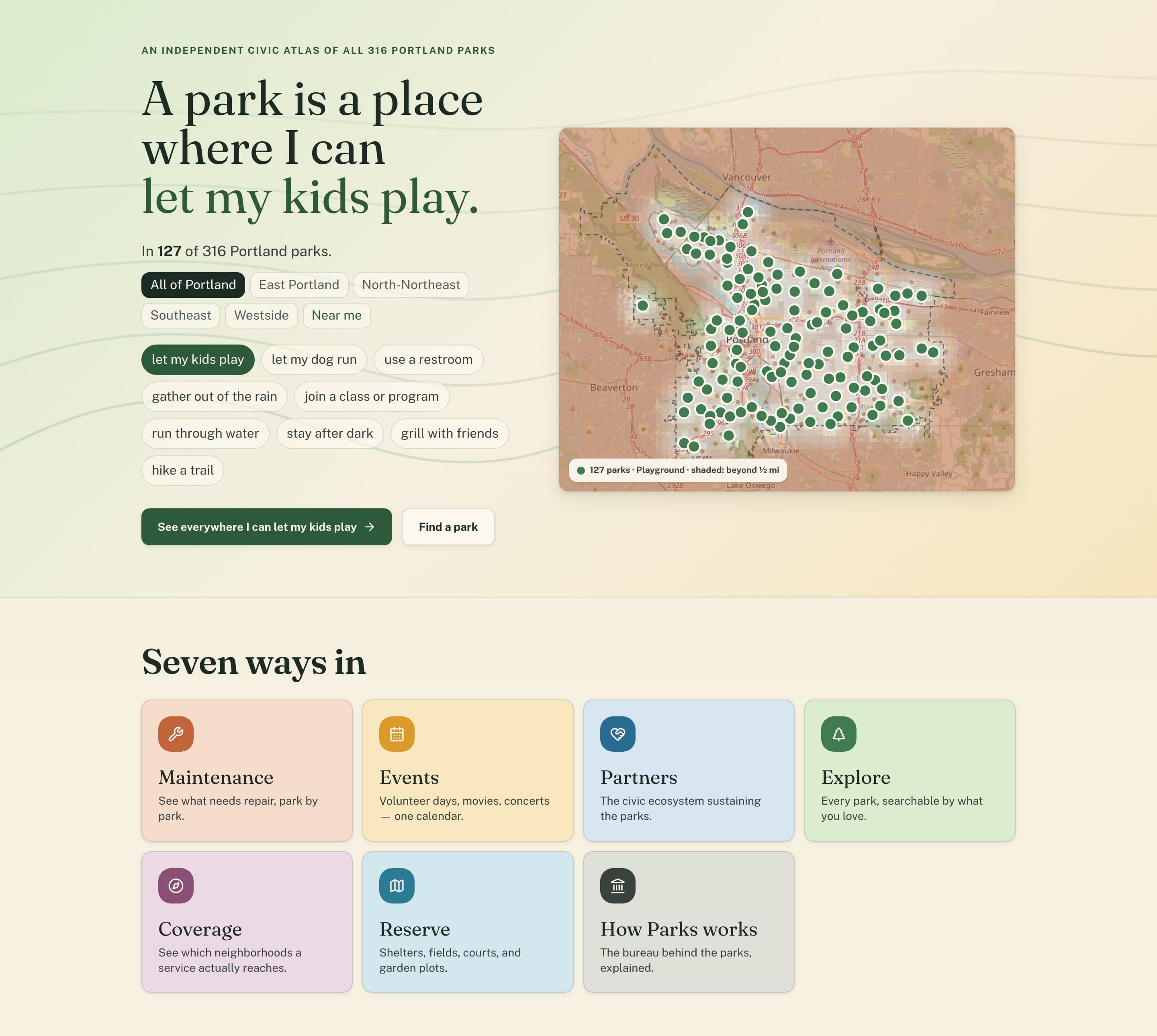
Portland Parks Atlas
All 316 parks, searchable by what you want to do there.
Conditions, maintenance backlogs, events, and the partners caring for each park, from public data.
Open
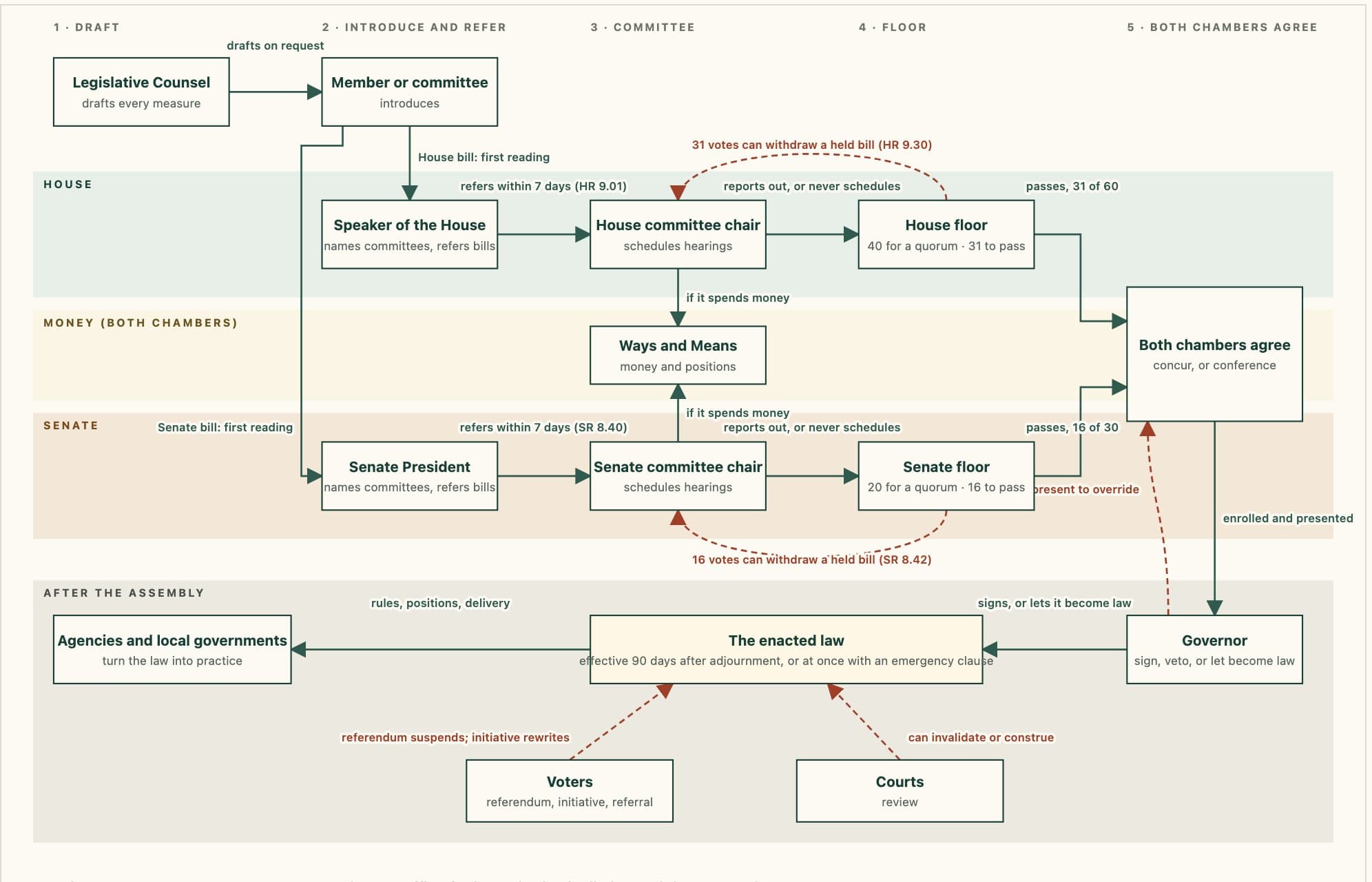
Oregon Governance Atlas
Who controls the next step of every bill.
The people and institutions that decide what becomes law, drawn from the chamber rules, with the bargains behind major decisions.
Open
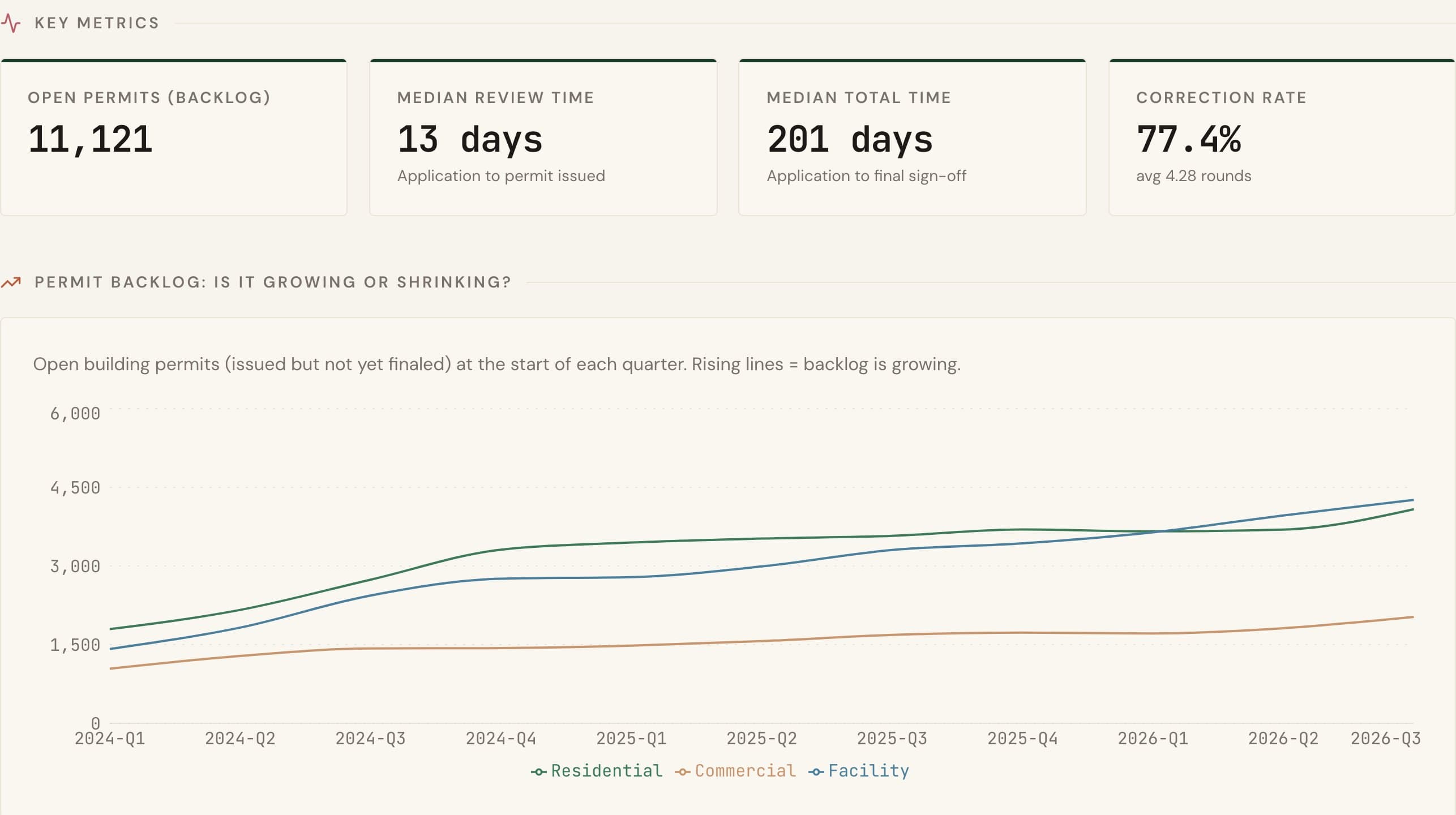
Dashboards
How Portland is actually doing.
Housing, homelessness, safety, budgets, and performance: official data in one place, every source linked.
Open
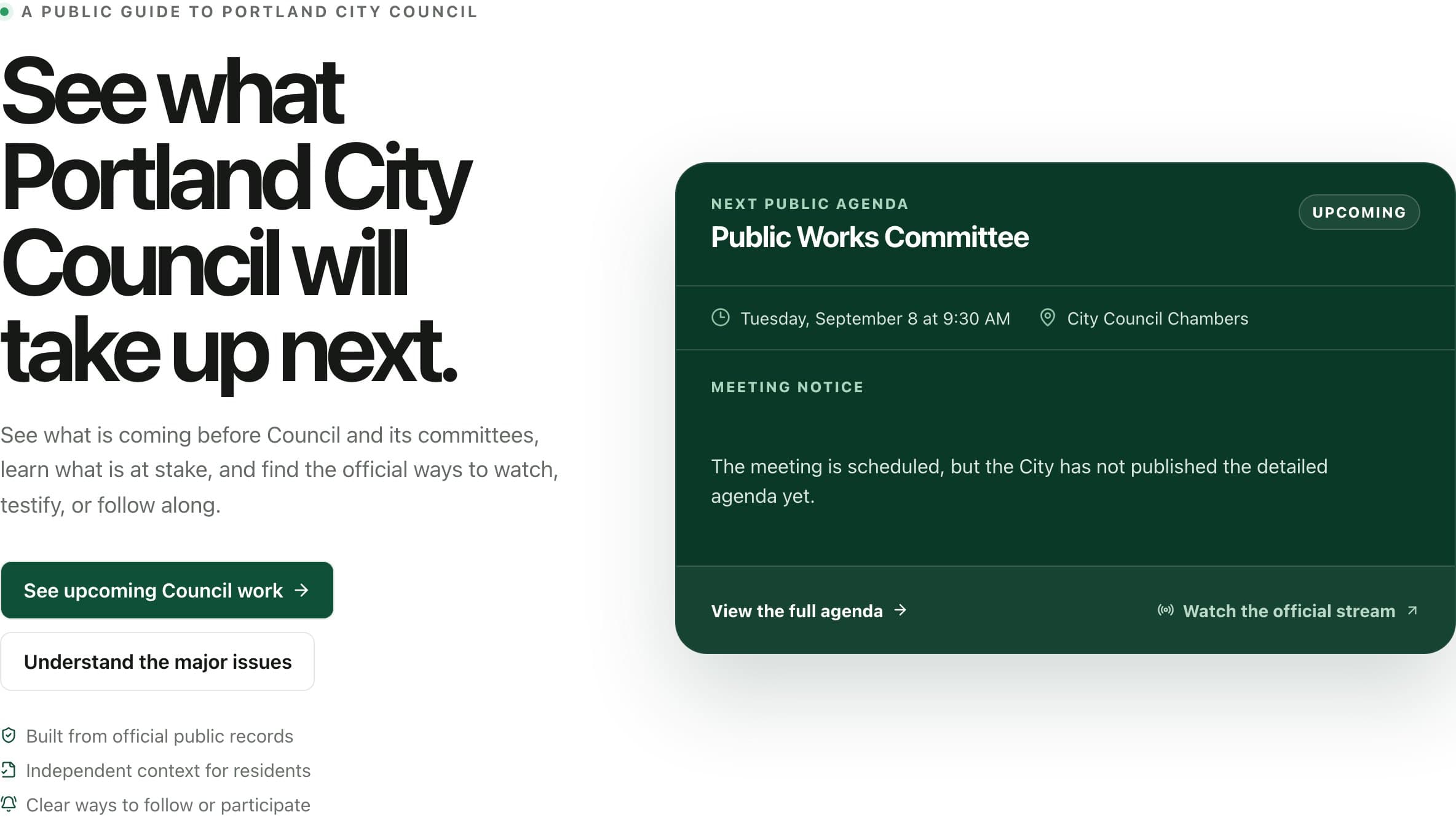
Portland City Council
What Council takes up next.
Every upcoming meeting from the official record, what is at stake, and how to testify.
Open
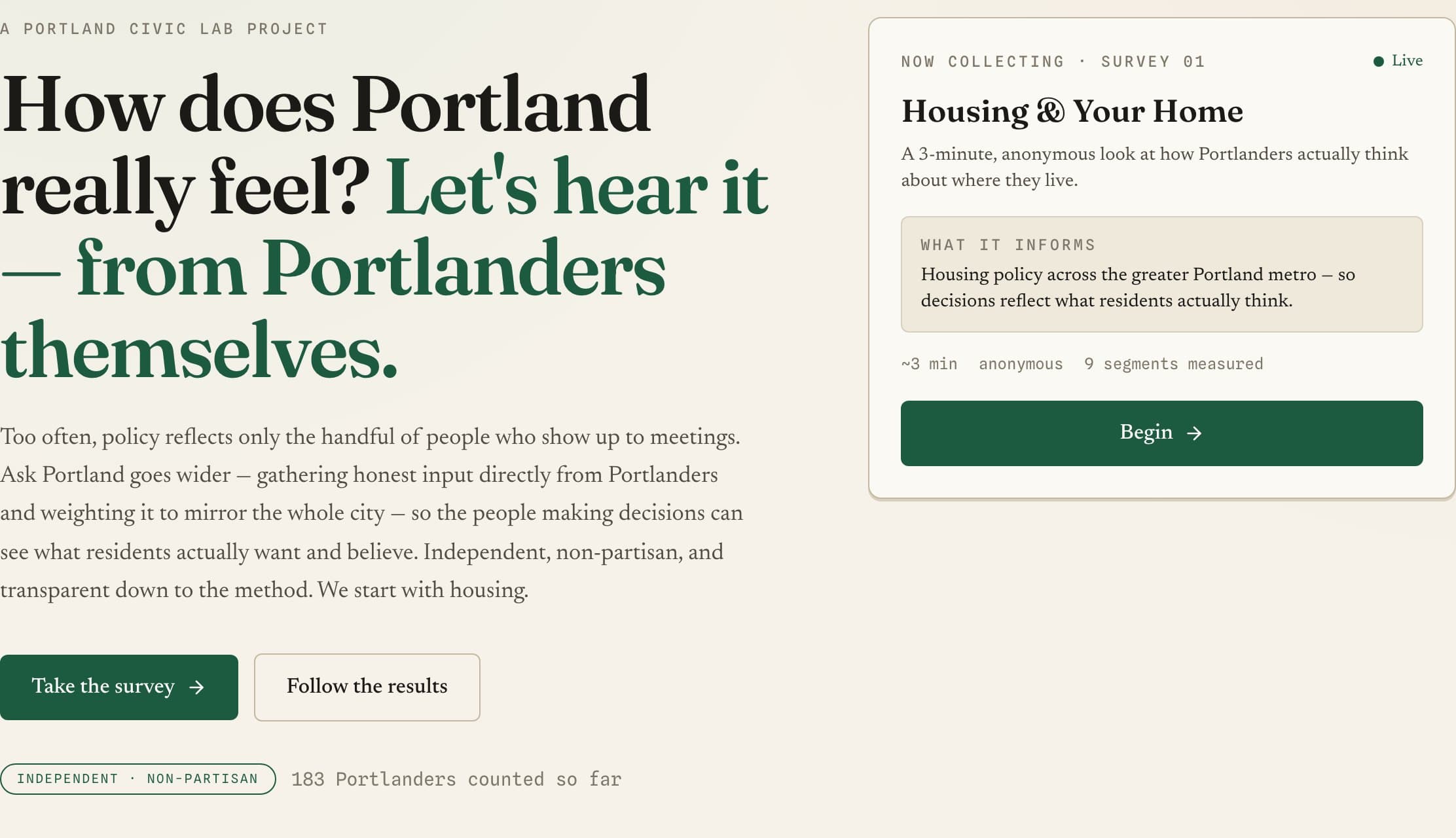
Ask Portland
What residents actually think.
Independent surveys weighted to the whole city, with the raw numbers shown next to the estimates.
Open
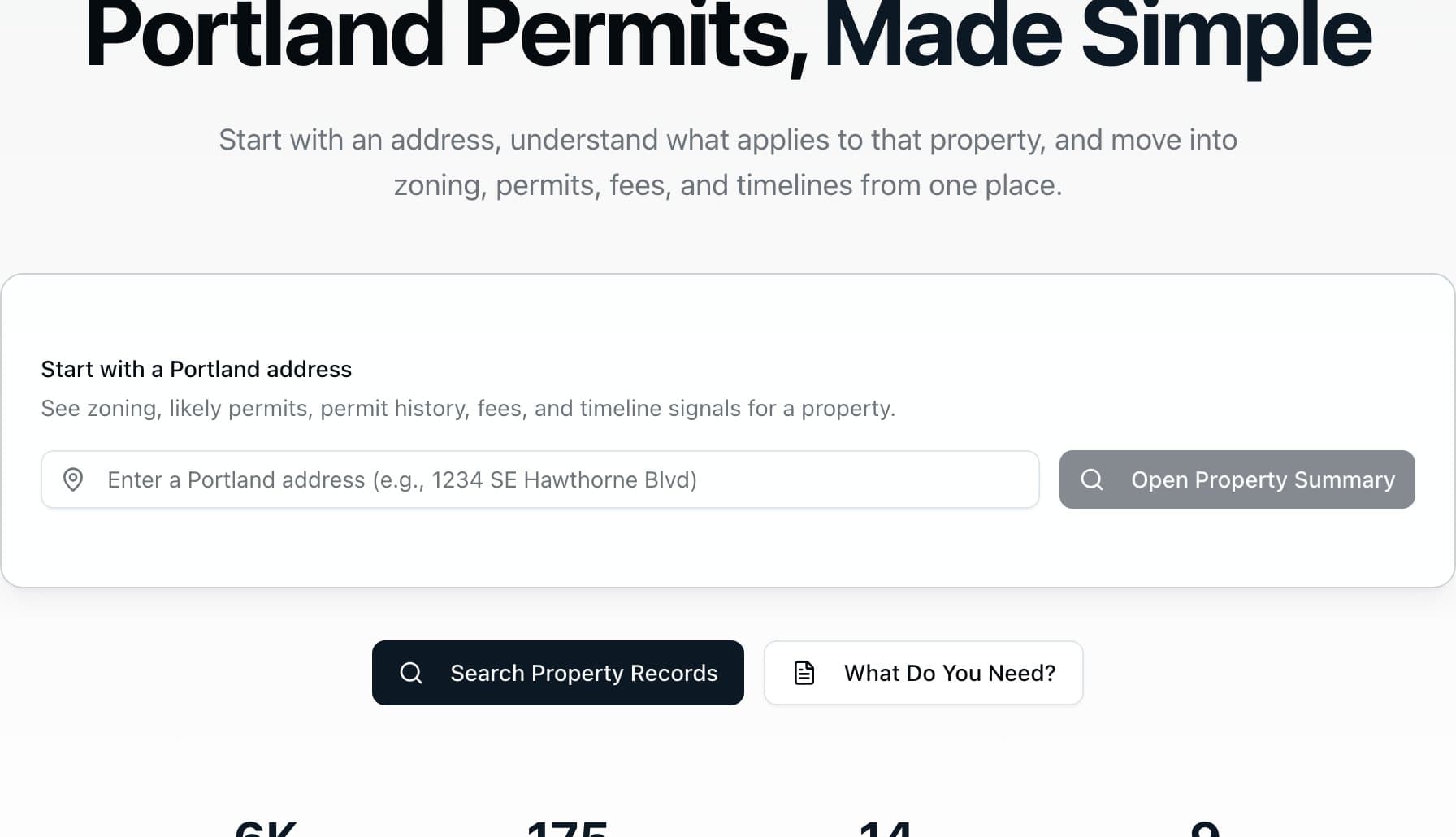
Portland Permits
Start with an address.
Zoning, likely permits, fees, and timelines for a property, before anyone files an application.
Open
The tools stay free. Supporters choose what we build next.
A founding supporter funds one program for a year and is named on it. Monthly supporters keep the tools running.
Founding support
$10,000–$25,000
a year, funds one program and names you on it
Get in touch
Monthly support
From $10
a month, keeps the dashboards current and the archive online
Support the work
Support isn't tax-deductible. How support works
Programs a founding supporter can fund
- 01The homelessness continuumAn interactive visual guide to placement barriers, reported local costs, and the connections that help housing last, grounded in public records.
- 02The Parks AtlasAll 316 parks, their condition and backlog, kept current, plus the access analysis the atlas still lacks.
- 03The deep-dive calendarThirteen so far. A year of support pays for the next ones, on questions readers propose.
A different kind of civic institution.
Portland Civic Lab is a small company that gives its civic tools away, pays for them with research and analysis work at published prices, and publishes the rules that keep the two from mixing. Nobody in Oregon has this job, so we took it.
How we're set up
 Edan KrolewiczFounder
- JPJonathan PulversPartnerships & Development
Two people at the center, plus whichever specialists, partners, and advisors a given project needs, all named in the work.
How the Lab is built