Skip to content
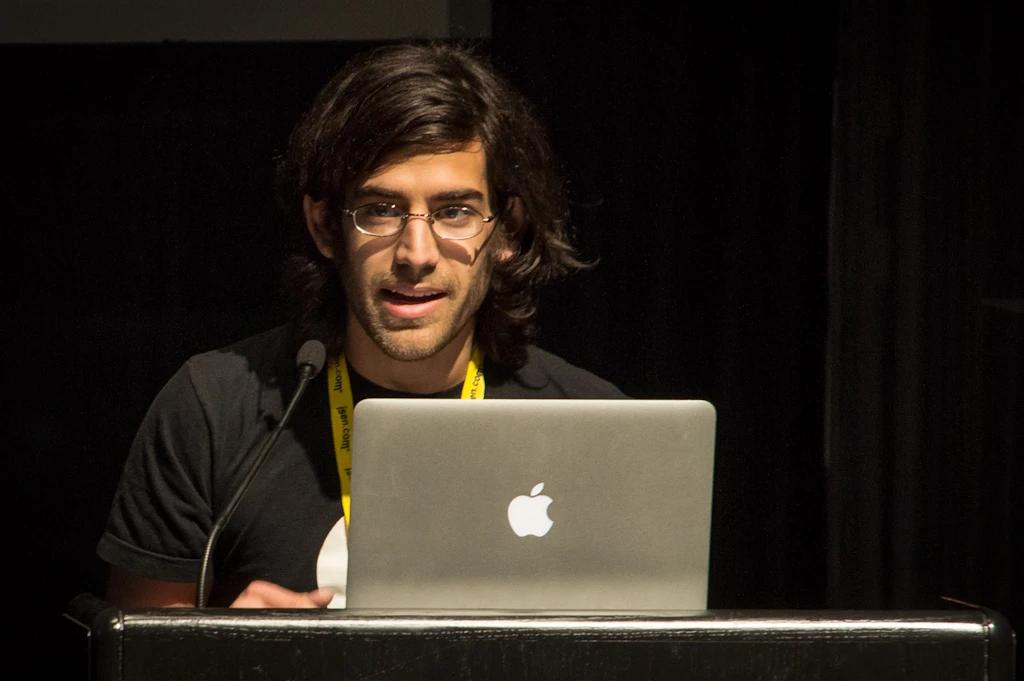
Aaron Swartz speaking from behind a laptop at a lectern
EventsSunday, November 8, 2026

Photo: Peretz Partensky, CC BY-SA 2.0

Aaron Swartzat 40: The Internet’s Own Boy

Aaron would have turned 40 on November 8. We spent the afternoon at 5th Avenue Cinema watching The Internet’s Own Boy, the film about his life. People who knew him, and people still doing the work he started, sent letters and videos to Portland for the day. This page keeps all of it.

Screening
5th Avenue CinemaPortland, Oregon
Aaron Swartz
Nov. 8, 1986Jan. 11, 2013
The film · 1 hr 45 minThe Internet’s Own Boy

What we watched

The Internet’s Own Boy: The Story of Aaron Swartz

Directed by Brian Knappenberger, 2014. 105 minutes.

If you don’t know the story: Aaron Swartz was a programmer who, at 14, helped write the RSS specification that still carries podcasts and news feeds. He helped build Creative Commons, was an early owner of Reddit, and later helped lead the campaign that stopped the Stop Online Piracy Act in Congress. He thought knowledge paid for by the public should be readable by the public.

In 2011 he was arrested for downloading millions of academic articles through MIT’s network. Federal prosecutors charged him with crimes carrying decades in prison. He died in January 2013, at 26, with the case still open.

The filmmakers released the documentary under a Creative Commons license, so the whole film is free to watch, here or anywhere.

The film deals with suicide. If you or someone you know is struggling, call or text 988.

The letters

What people sent

In October we started writing to people who had known Aaron or built on his work. We asked whether they would send a few words to a room of strangers in Portland. Carl Malamud answered in fifteen minutes. A senator’s office sent a statement. Three people recorded videos.

Everything is printed here as it was sent, with each author’s permission. Read in order or jump around. The short ones are as good as the long ones.

Aaron Swartz was a force of nature and it was a privilege and an honor to work with him for over a decade. Universal access to human knowledge is the great promise of our times and Aaron believed that fervently. He spent his life trying to make it possible.

Carl Malamud

Founder of Public.Resource.Org. He and Aaron worked together for more than a decade, including the project that pulled millions of federal court records out from behind the PACER paywall.

Statement

Senator Ron Wyden

Oregon’s senior U.S. senator. He appears in the film, and he spoke at Aaron’s memorial in Washington in 2013.

History has proven Aaron right.

Statement from Oregon’s U.S. Senator Ron Wyden on the 40th Birthday of Aaron Swartz

I am sorry I can’t join you all here in Portland to remember Aaron Swartz today, when he would have been 40 years old.

Aaron worked closely with my office on a number of civil liberties issues. As I said at his memorial, 13 years ago, Aaron will forever remain an inspiration. During his short time on earth, he made an eternal difference.

The federal government persecuted Aaron with overblown criminal charges because he tried to break down barriers to the flow of information. History has proven Aaron right.

Aaron’s values of service, of championing open communication and advocating for those who aren’t represented by powerful interest groups or corporations continue to be a lodestone for me and so many others. We give Aaron our thanks and reaffirm our commitment to continue his march for freedom and a more just world.

Ron Wyden, United States Senator

An introduction to the filmTrevor Timm

Video

Trevor Timm

Executive Director of Freedom of the Press Foundation, which maintains SecureDrop, the whistleblower submission system Aaron was building when he died. He recorded this as an introduction to the film.

Video · 2 min 15 s

David Weinberger

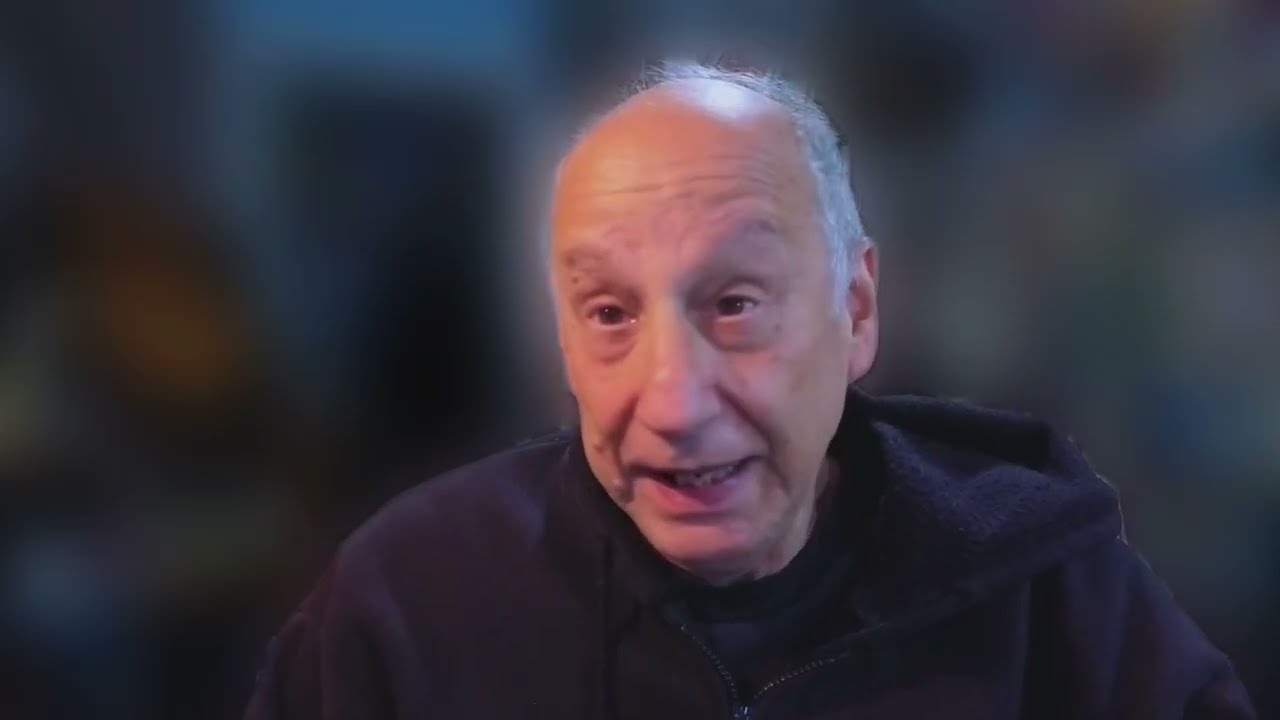
A fellow at Harvard’s Berkman Center when Aaron was there, and one of the speakers at MIT’s memorial for him. He recorded this the same morning we wrote to him.

Letter

Creative Commons

Aaron was 15 when he helped build the machine-readable layer underneath Creative Commons licenses. The organization turns 25 this year. Annemarie Eayrs, who works there and lives in Portland, brought their statement to the screening.

He didn’t wait to be asked.

As we reflect on Aaron Swartz’s life and legacy today, Creative Commons has a particular connection to his story. Aaron isn’t someone we simply admire from a distance. He was part of our beginning, and the ideas he believed in so deeply continue to shape who we are and what we stand for today. And there’s a story that has been passed down from those early days that we think says a great deal about who he was.

In 2001, a small group of people, including law professor Lawrence Lessig, began developing what would become CC. They had an ambitious idea to make it easier for people to legally share knowledge and creativity. At the time, Aaron was a teenager. When he read about what they were trying to do, he had an idea. So he wrote to Lawrence about how to make CC licenses understandable to computers. Lawrence listened and invited Aaron to help build it. And Aaron did.

But what stays with us is larger than Aaron’s intelligence. Here was a young person who saw a problem, imagined a solution, and decided to do something about it. He didn’t wait to be asked. And someone on the other end recognised that a good idea can come from anywhere. That exchange helped shape the technical foundations of CC. But we believe Aaron’s legacy is about something much bigger than technological solutions.

Keep reading4 more paragraphs

Under the tech was a core belief that knowledge was meant to be shared and that the internet could give people extraordinary freedom to learn, create, question, and take part. And that when something stood in the way of those possibilities, we had a responsibility to challenge it.

This year, Creative Commons turns 25. And those beliefs are being tested in ways we could hardly have imagined 25 years ago. AI is changing how knowledge is created, shared, and used. The questions Aaron cared about—who controls knowledge, who benefits from it, and who gets to participate—haven’t gone away. If anything, they’ve become more urgent.

If Aaron were standing with us today, what would he question? What possibilities might he see that the rest of us are missing? Perhaps one way to honour his legacy is to carry forward his spirit of conviction, imagination, and determination. To keep questioning what seems inevitable, challenging what seems immovable, and fighting for a world where knowledge and creativity can flourish for everyone.

We’re grateful that Aaron was part of CC’s beginning. And we’re even more grateful for the possibilities he helped open up for all of us.

Creative Commons

Letter

Molly Shaffer Van Houweling

First executive director of Creative Commons, now a professor of law at Berkeley. She is the person who handed Aaron the microphone in 2002.

He was 15. He looked about 11.

As the first executive director of Creative Commons, I was witness to Aaron’s essential contributions to the birth of CC and the open culture movement. Aaron was the architect of the machine-readable layer of CC licenses–a key feature designed to make sure the licenses could be understood by machines as well as by lawyers and regular humans.

We launched this idea at a conference in May 2002 where I turned the microphone over to Aaron to answer all of the difficult questions. He was 15. He looked about 11. I had just met him and handed the mic down to him with some trepidation. I figured, “well, at least he’s adorable!”

Of course Aaron answered all of the questions and delighted the audience—not with his adorableness, not only that—with his vision and with his ability to communicate it to all of us. We were finally hearing from someone who could explain to humans, and even to lawyers, how to harness the power of machines to overcome unnecessary limits on sharing.

There are now billions of CC-licensed works that can be freely shared thanks to Aaron’s vision, genius, and passion. Billions of tributes to Aaron that we can “share alike” to build on his legacy. Let’s do that, friends. Share on.

Molly Shaffer Van Houweling

Video · 3 min 30 s

Cory Doctorow

Novelist and activist, and one of the voices in the film. He talks about what Aaron left behind, and about what any of us can do that goes further than our own shopping habits.

Letter

Peter Suber

Director of the Harvard Open Access Project and author of Open Access. He shares Aaron’s birthday, and turned 75 on the day of the screening.

The best advertisement for open research is open research.

Aaron and I were fellow fighters for open access to research.

But we had more in common than that, and it’s a little eerie. First, we have the same birthday -- today. We grew up in the same town -- Highland Park, Illinois. My parents and his parents both moved from one side of town to the same street on the other side of town.

We didn’t know each other growing up because we’re 35 years apart. Today, when he would have turned 40, I turn 75. I was long gone from our home town when he came along.

We overlapped again in Cambridge, Massachusetts, where we first met around 2009. We knew each other’s work, which made us want to talk. But we didn’t know our other commonalities until we started talking. We quickly agreed to work on a joint project built on the global network of open-access repositories. Unfortunately this was just one of many projects he had to drop when he was arrested.

Keep reading4 more paragraphs

I miss his brilliance, energy, dedication -- and collaboration. I thank you all for gathering today to celebrate him.

What is one concrete thing you can do to advance open access? OK, what are a few concrete things?

If you’re a publishing scholar, at least make your own work OA. Start with your new works, as they come out. Then make your past works OA retroactively. If you have time, take part in the advocacy efforts of the wider OA movement. But if you don’t, then just make your own work OA. The best advertisement for open research is open research.

If you’re not a publishing scholar, if you’re more a research reader than a research author, or if you simply benefit from research, as we all do for example from medical and climate research, then support OA policies at research funding agencies. Support similar OA policies at universities. When you share research with others, say, by email or social media, share links to OA copies when you can. Above all, inform yourself about the nuances of OA, and correct misunderstandings whenever you run across them. OA is held back more by misunderstandings than anything else. They give it a bad name, confuse the undecided, slow its growth, and deter people from taking up the cause.

Peter Suber

Letter

Meredith Whittaker

President of Signal.

He understood that decisions about who can access knowledge are decisions about power.

Aaron should have been able to turn forty. He should have had decades more to think, to build, to change his mind, and to live.

He understood that decisions about who can access knowledge are decisions about power. And he took seriously the responsibility to challenge those who hoard it. That commitment connects the fight for open knowledge with the fight for privacy: people need the freedom to learn, to communicate, and to organize without being watched and controlled by the institutions they might challenge.

For those of us building technology today, honoring Aaron means asking whose power our work serves, and being willing to act on the answer. It means building institutions that can sustain that work, and taking care of the people who do it. Thank you for coming together to remember him, to Portland Civic Lab for being the kind of special place to put something like this together, and most importantly, for carrying that responsibility forward.

Meredith Whittaker, Signal

Letter

Fight for the Future

The group came out of the January 2012 fight against SOPA, which Aaron helped lead. Their executive director, Sarah Roth-Gaudette, wrote this.

The fights Aaron cared about are not over. They just have new names.

A message from Fight for the Future

Good afternoon, Portland. We’re Fight for the Future, and we’re grateful to Portland Civic Lab for bringing you together today, on what would have been Aaron Swartz’s 40th birthday.

Forty. It’s hard to imagine what Aaron would have accomplished by the time he turned forty. Imagine Aaron in the middle of today’s fights over artificial intelligence, asking out loud why a handful of companies get to scrape the world’s knowledge while students still can’t read the research their own taxes paid for. Imagine him building the tools that allow ordinary people to see who’s tracking them, and organizing the campaigns that shut those systems down. Imagine the projects he would have started that we can’t even picture, because he always saw them before the rest of us did.

That’s what was taken from all of us when a federal prosecution over downloading academic articles, and the threat of decades in prison, ended his life at twenty-six.

Keep reading7 more paragraphs

But Aaron had already shown us something that doesn’t depend on any one person. In January 2012, everyone said SOPA, a bill that would have let corporations censor huge parts of the internet, was a done deal. Then millions of ordinary people called, emailed, and blacked out their websites, and the bill died. Fight for the Future was born in that fight, alongside Aaron. The work he would have done at forty is still out there waiting. It’s up to us to do it.

Here’s what we want you to know as you leave: the fights Aaron cared about are not over. They just have new names.

Right now, states across the country are pushing “age verification” laws that would force you to hand over ID to read, post, or search online, and some are going after the VPNs people use to stay private. They’re sold as protecting kids. In practice, they build a censorship and surveillance machine for everyone. Aaron spent his life tearing down barriers between people and information. These laws build new ones.

And here in Oregon, there’s a fight you can win this coming year. Cities from Eugene to Bend have already dropped Flock license plate cameras, and state lawmakers from both parties have said they’ll introduce a statewide ban in the 2027 session. Surveillance networks that track where you drive are the same kind of power Aaron warned about: information about the public, controlled by a few.

So here is our ask. Before you leave today, take out your phone and go to fightforthefuture.org. Sign up so we can tell you the moment these bills move. Then, when the legislature convenes, call your state representative and senator and tell them two things: no ID checks to use the internet, and yes to banning license plate surveillance.

It will take you five minutes. Aaron showed us that five minutes, multiplied by millions of people, can stop a bill everyone said was unstoppable.

Happy birthday, Aaron. We’re still fighting.

Sarah Roth-Gaudette, Fight for the Future

Letter

Nick Shockey

Associate Executive Director of SPARC, the coalition of libraries and universities working for open access to research. He has worked in open access advocacy since 2006, alongside many of the people Aaron knew through Students for Free Culture.

There is no doubt Aaron would have been at the forefront leading the fight on issues that have only become more relevant since his passing: paywalls, privacy, censorship, money in politics. In this work, Aaron brought people together. It’s a testament to his legacy that he still does: through the things he built, through his incisive advocacy, and through the people he continues to inspire to show up like you all are tonight. In building community with one another on what would have been his 40th birthday and in doing the work the group here no doubt does every other day, you’re carrying on that legacy and planting seeds for the needed change that Aaron could see so clearly and fought for so fiercely.

Nick Shockey, SPARC

SPARC’s Cost of Knowledge analysis finds that more than 95 percent of the investment in a published research article is made by the public before it ever reaches a publisher.

The last word

Aaron believed that knowledge locked away is knowledge lost to people. Soon after he logged out from this world, the g0v civic tech community in Taiwan honoured him by opening something we all used: the Ministry of Education’s dictionaries, returning the text to the people. Hundreds of volunteers turned them into MoeDict, an open dictionary that anyone can read, correct and build upon, now also in Taiwanese Hokkien, Hakka and Amis. That is how I remember Aaron: as an invitation. Each of us can find one piece of public knowledge that is locked away, open it, and invite our neighbours to make it better. Happy 40th birthday, Aaron.

Audrey Tang

Taiwan’s first digital minister. She came up through g0v, the volunteer civic tech community there.

We took her up on it. You can too.

Portland Civic Lab opens up the public records of one city. The budget, campaign money, council votes, the parks. Most of it was already public and almost none of it was readable. We turn it into tools anyone can use, and we show our sources. Membership is free.

With thanks

To everyone on this page. To Annemarie Eayrs, who came with stickers. To Bart Massey and Portland State for the room, and to 5th Avenue Cinema for the screen. And to everyone who gave a Sunday afternoon to sit in the dark with us.

From the organizer

I was at MIT from 2008 to 2013, and like many in that community, I was heartbroken by Aaron’s death. His belief in making knowledge accessible and using technology for the public good feels more important than ever. It’s a spirit I hope to carry into the work of Portland Civic Lab.

Edan Krolewicz, founder