
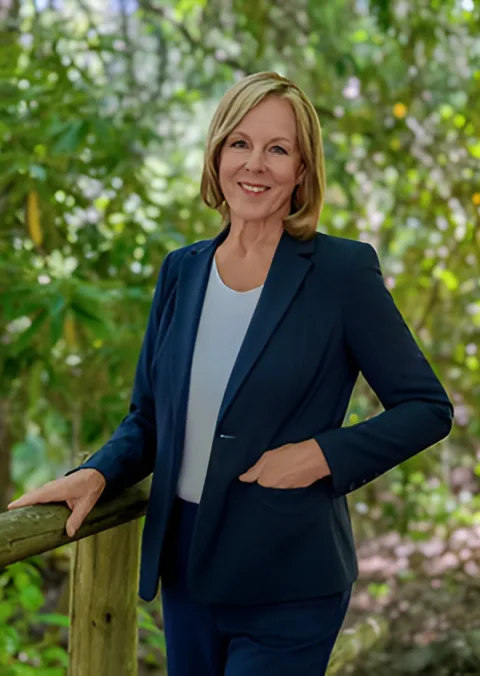
U.S. House · District 1 candidate · U.S. Congress · November 3, 2026
Barbara J Kahl
Veterinarian; describes more than three decades serving Oregon communities.
Reach the campaign
- drkahlforcongress.com (opens in a new tab)
- info@drkahlforcongress.com
- (971) 459-1058
- Contact form (opens in a new tab)
As published in their pamphlet statement and campaign site.
In their words
Said: My family has been in NW Oregon over a century; this is my home.
Voters’ pamphlet
Candidate statement · Filed for the November 2026 pamphlet; posted by the Secretary of State September 9, 2026; extracted September 21, 2026
Oregon voters’ pamphlet candidate statement · PDF page 7 ↗Verbatim opening of the candidate's own statement; publication by the state does not verify the claims. Nothing was skipped before it.
The verbatim opening of their voters’ pamphlet statement, the same rule for every candidate. We chose nothing.
What they say they would do
Our summary of their platform, in our wordsConnects economic growth with support for businesses, workforce education, increased housing supply and federal oversight.
- Support school choice and education funding that follows the student.
- Streamline housing permits and use federal incentives to reduce financing barriers.
- Support working ports, timber communities and law-enforcement funding with accountability.
Our reading
Our interpretation, not their wordsCutting federal regulations and taxes while restoring housing, timber and maritime industries relies on growth to replace revenue; the reviewed materials name directions, not the rules or dollars involved.
Where they stand
Housing and homelessness
Supply at every price- What
- Said: Would expand housing supply at every price point, streamline permitting, and use federal incentives to reduce financing barriers for first-time buyers and working families.
- How
- Said: HUD grants for new construction and rehabilitation, faster permitting and trades partnerships, with builds tracked publicly; HHS funds for addiction and mental-health recovery networks vetted through the Oregon Medical Board.
- Measured by
- Said: Builds and rehabilitations tracked publicly, and patient outcomes measured from intake to self-sufficiency, targeting 2027–2028 project windows.
Public safety and immigration
Fund local police- What
- Said: Supports local law enforcement with funding and accountability.
- How
- Said: Federal COPS and SAFER grants for police and fire payroll and equipment, with federal accountability standards she says would require addressing Oregon’s sanctuary laws; task forces on cybercrime, narcotics and trafficking.
- Measured by
- Said: Audited 911 response times for police and fire, crimes curtailed, pounds of drugs removed and people freed from trafficking.
Taxes, spending and your bills
Cut regulations and taxes- What
- Said: Would cut redundant federal regulations and taxes, track taxpayer dollars with no blank checks for NGOs or special interests, and revive the timber, tech, agriculture and maritime industries.
- How
- Said: A larger federal audit team, with recovered waste applied to the debt; remove duplicate federal-state regulations and fees; then rebalance the tax code to ease payroll taxes on small businesses. She pledges no tax increases.
- Measured by
- Said: Less regulatory duplication for builders and growing businesses, and more money left with taxpayers.
Transportation, energy and climate
Timber and environment- What
- Said: Wants forest and land management that sustains both the environment and timber-dependent communities.
- How
- Said: With the Army Corps of Engineers, buy modern dredging equipment and build environmentally safe silt storage so the Columbia can take larger cargo ships; keep hydropower and add small modular reactors.
- Measured by
- Not in their sources
The choices this office faces
Every candidate in this race is asked the same 8 questions. Barbara J Kahl is on record on 8. A question without an answer is a research gap, not a position.
On recordKeep H.R. 1’s Medicaid work rules, six-month renewals and SNAP cuts, or repeal them?
Said: Supports work requirements and real eligibility verification as accountability for taxpayer dollars, while providing support to those who qualify; says a culture of government dependence is shrinking the workforce.
Restore the enhanced Affordable Care Act premium tax credits that expired December 31, 2025?
Said: Says the restored credits feed rising hospital prices; would revamp antitrust law with guardrails on private equity, standardize Medicare and Medicaid pricing, and require price transparency before care.
End the tariffs and take tariff power back from the president?
Said: Calls the tariffs well intentioned but poorly executed; any tariffs should be phased in, each phase paired with an income-tax cut, with large importers bound by agreements limiting costs passed to consumers.
Fund the $70 billion expansion of ICE and Border Patrol through 2029 (the Secure America Act)?
Said: Would fund ICE with caveats: reassess annual immigration limits, speed citizenship processing and cut the legal-entry backlog, use AI tools for faster background checks, and enforce the law for people entering illegally.
Direct the president to end U.S. military involvement in the war with Iran?
Said: Says Congress should decide whether the war continues, after consulting people with military experience in the region; she does not say which way she would vote.
On the topic; the exact choice is unsaid.
Pass the Fix Our Forests Act: faster thinning and logging on federal forests with shorter windows to sue?
Said: Would vote to thin federal forests while enforcing riparian protections, and bring the timber home to reopen mills, supply homebuilding and fund rural schools and public safety.
Expand the federal role in housing, from the new ROAD to Housing law to more vouchers and tax credits?
Said: Would keep HUD, USDA, FHA and VA housing programs well funded, calls the ROAD to Housing Act a great win, and would streamline federal permitting and hold the agencies to the new rules.
Should federal policy rein in data centers’ power, water and cost impacts, or keep fast-tracking them?
Said: Wants data centers controlled: tax breaks removed and returned to the public, their own power when they use more than similar businesses, enclosed cooling to protect water supplies, and stacked rather than sprawling designs.
Their answers to our questions
Housing and homelessness
Said: Federal HUD grants should fund both new construction and brownstone rejuvenation so federal dollars reflect Oregon’s diversity, not just refugee-targeted capacity. Direct attention toward permitting speed and trades partnerships, with budget tracking of builds and rejuvenation publicly, transparency required. Pair this with Federal HHS funds for stepwise addiction/mental health recovery networks vetted through Oregon’s Medical Board blended with vetted, transparent accountability partners, who will measure patient outcomes. Measure results transparently: from intake to success as a productive citizen. Target 2027–2028 project windows, congressional budget permitting.
Public safety and immigration
Said: Federal funds are available through COPS and SAFER grants to supplement police and fire services via payroll and equipment purchases, provided federal accountability standards are attached. That federal accountability would require addressing Oregon’s sanctuary laws. Federal enforcement priorities would include cybercrime, narcotics and human trafficking task force enhancement. Audits of response times for 911 calls for both police and fire are measurable. Data showing crimes curtailed, pounds of drugs removed from the streets and people freed from trafficking would be immediately measurable. OR-1 has not seen those grants in 4 cycles with the current representative. It doesn’t require Salem to approve them.
Taxes and spending
Said: Tax code, federal audits, federal grant oversight. Multiple federal agencies have regulatory overlap with state agencies. Removing duplicate regulations and permitting fees on those duplicate regulations would ease burden in builds, environmental protections, energy and a multitude of other side areas. I’d work to develop an enlarged audit team, applying recovered waste to federal debt paydown, followed by a federal tax-code rebalance to ease the payroll tax burden on small businesses. The measurable results would be less regulatory burden and duplication when building or businesses want to grow, with more money left in taxpayers’ pockets. I made a commitment to not increase taxes; I intend to keep it.
Transportation, energy and environment
Said: Federally, I think of transportation as the Columbia River, an economic hub serving the entire NW and sometimes farther. To keep the Columbia moving billions in products, dredging must occur. Our dredging equipment is over 50 years old and the river depth is insufficient to accommodate larger, deeper-hulled shipping vessels. They are migrating towards the Puget Sound, taking billions of income from Oregon ports. Working with the Army Corps of Engineers, purchase modern dredging equipment, develop silt storage that protects our environment, to bring the Columbia River into the 21st century for cargo shipping. Additionally, the Columbia River is our most environmentally safe, dependable energy source through hydropower. Recent solar and wind energy projects have shown some benefit, but they are unreliable, requiring fossil fuel as back up and oil to keep the wind turbines moving. [...] Moving toward incorporating SMRs would be beneficial. These are zero carbon units that produce reliable constant energy lasting 60 years without needing storage units. Storage, post-lifecycle, is also an open area for resolution.
Medicaid and SNAP
Said: As a compassionate person, this is a difficult question, however, it is taxpayer money we are talking about. While I appreciate these programs in times of need, we must also understand that a culture of government dependence has been growing in our country. We are losing our workforce that provides the dollars to sustain these needed programs. Congress sets the eligibility rules regardless of state sanctuary policy. I support work requirements and real eligibility verification as basic accountability for taxpayer dollars, not a state fight, but a federal one. We must provide needed support to those who qualify, not to those who choose dependence over self-sustainability.
Federal housing programs
Said: Multiple housing programs are available, including HUD, USDA, FHA, and VA for those who qualify. I will ensure these programs are well funded to meet our needs. The federal ROAD to Housing Act was a great win that supports these agencies’ work on new housing construction or repairs needed to make homes livable. It supports reducing local permitting barriers, cutting regulatory delays due to environmental oversight, and duplicate permitting now in existence, where I will ensure the federal permitting processes are streamlined. [...] As these are new changes, I will ensure these agencies are held accountable for following the new laws.
ACA premium credits
Said: The ACA premium credits were restored temporarily. However, that won’t fix the broken medical system. Private equity has driven hospital pricing up 37%; Medicare pays conglomerates up to 4 times more for the same service a private physician provides. Those ACA credits are feeding the dragon that continues to raise the prices for their profit margins. I will work to revamp antitrust laws, placing guardrails on private equity firms. Creating standardized pricing throughout Medicare and Medicaid will bring costs down while requiring cost transparency to patients before services are provided.
Tariffs
Said: Tariffs, well intentioned, poorly executed. If we adopt the tariff model, it needs to be phased in instead of imposing them all at once. Pair each phase with an income tax reduction. Require large importers to sign enforceable agreements limiting cost transfer to consumers. Protect American industry by bringing manufacturing back to the U.S. (the original intent of the tariffs) and allow corporations to grow jobs without forcing families to pay for it.
ICE and border money
Said: Yes fund ICE, with caveats. Unfettered immigration most damages those who immigrated here legally. [...] To best use those funds, I’d begin by assessing the maximum number of people allowed into the U.S. annually and determine if that number still makes sense. I’d evaluate the manner in which they are allowed in: does it take American jobs or promote growth in American resources? I’d focus on citizenship processing for those immigrating legally. Perhaps this would remove the decades long backlog. Fund development of AI tools to perform background checks in minutes, not months. Reduce the redundant paperwork burden for legal entries. Enforce the law for those coming here illegally.
Iran war powers
Said: I come from a long line of military family members. My own husband was deployed in the Persian Gulf and the Strait of Hormuz while I was the ship’s ombudsman; I know why they are there. [...] Congress should determine if the war should continue, but those with military experience in this conflict zone must be consulted to understand the true risks if we leave that area.
Fix Our Forests Act
Said: I was disappointed that our incumbent in CD1 voted No on the Fix our Forests Act. [...] Yes, I would vote to thin our forests, protect our environment by enforcing riparian zone areas, and bring that timber home to reopen our mills, put people back to work milling wood to build homes, reducing costs, bring revenue back to rural schools and for rural public safety needs.
Data-center costs
Said: I would like to see data centers controlled, tax breaks removed and those funds returned to the public trust. I’d like data centers to provide their own energy when their need exceeds other businesses of the same size, and mandate enclosed cooling systems to avoid draining water reservoirs and aquifers that feed public water. I’d like to envision re-engineering them to be stacked rather than sprawled.
Education and school choice
Said: Federal incentives and school choice go hand in hand for me. I’d remove ESSA and replace it with STEP (Student Teacher Empowerment Act), refocusing schools on measurable academic progress in math, reading, writing, civics, history, and science (STEM), with the science of reading and critical thinking built in throughout, backed by a required 15 hours of continuing education (CE) per year of academic-rigor, neuroscience, and child development training for educators. Based on educational research, I’d remove tablets below 9th grade. I would add PE, music, and art as core K–6th grade subjects, adding electives of trades education, math and art, for 7th–12th grades, handing that control back to states and districts. [...] Rural and underserved communities will be on an equal playing field to receive funding. That same principle—funding follows the student—drives my view on school choice. Administrative staff in schools has grown extensively while teacher staffing levels have fallen behind; I want to flip that by funding teachers and reducing class sizes. The administrative budget can be redirected to teacher salaries. [...] Where public education isn’t the right fit, funding should follow the student rather than staying locked to the district. [...] Bring back academics, smaller class sizes, and more teachers, and we wouldn’t be having this discussion.
A question the evidence leaves open
Which federal incentives and regulations would you change, and how would school choice affect public-school funding?
Sources (4)
- Kahl · campaign platformCandidate statement · Undated page; reviewed September 18, 2026
- 2026 qualified filing · RepublicanElection authority · Checked September 18, 2026
- Oregon voters’ pamphlet candidate statement · PDF page 7Candidate statement · Filed for the November 2026 pamphlet; posted by the Secretary of State September 9, 2026; reviewed September 21, 2026Campaign position. Claimed results and numerical premises have not automatically been independently verified.
- Kahl · emailed response to the Lab’s questionsCandidate statement · Received September 25, 2026Written by the candidate in reply to the Lab’s questions and kept on file; the answers are quoted on the brief. Receipt does not verify the claims.