One candidate leads with public services and rights protections, another with business conditions and performance budgeting, and a third with a dignity-centered critique of shareholder-first capitalism that carries less policy detail.
Draft; human review pending.
Key
Said
A campaign statement, in our summary or their words.
Voted
A recorded Council roll call.
— Not found
Not in the sources we reviewed. A research gap, not a position.
Supports stronger public education, housing stability, broader healthcare access and reproductive freedom.
Supports expanding affordable housing, protecting tenants and partnering with cities on root causes.
Supports community-based safety, gun-violence prevention and trained, equipped police.
Wants more state school investment, no vouchers, and lower health-care costs.
Supports 100% clean energy, sustainable infrastructure and local road fixes.
Summaries are our one-line readings of what each candidate says. Issue lines are short forms of the positions in each brief, AI-drafted and awaiting human review; “—” means not found in the sources we reviewed.
Four votes that split this Council
No candidate in this race sits on Council today.
— Not foundNo featured votes are selected for this race yet.
Candidate briefs, A–Z
House · District 26 candidate · Oregon Legislature · November 3, 2026
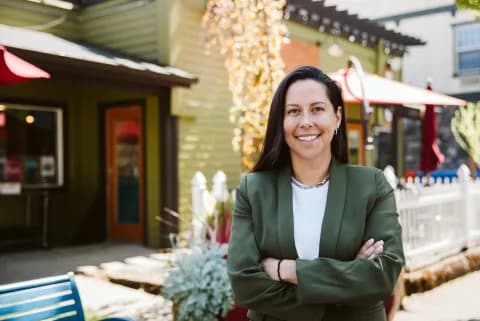
Steph Terrio
Candidate for House District 26.
Photo: Campaign photo · terrioforus.com
In their words
Said: Oregon's working class must feel represented. I'm running for House District 26 because we the people deserve legislators who do more than listen.
Voters’ pamphlet
Candidate statement · Filed for the November 2026 state voters’ pamphlet; extracted September 21, 2026
First two sentences of the filed statement (the first is under 12 words); header fields skipped.
The verbatim opening of their voters’ pamphlet statement, the same rule for every candidate. We chose nothing.
What they say they would do
Our summary of their platform, in our words
Frames politics around human dignity, clearer legislation and resistance to economic and political systems that prioritize private gain.
Write legislation that is precise and understandable.
Evaluate decisions by their effect on constituents’ dignity.
Challenge manipulation by political allies as well as opponents.
Our reading
Our interpretation, not their words
Human dignity
Anti-corporate
A philosophy of representation (dignity, plain legislation, naming manipulation) with a few concrete proposals, several federal; the policy page names ideas rather than state bills or costs.
Said: Every citizen should be afforded a place to live; she would back a program requiring timber companies to supply renewable plant material for temporary housing.
How
Said: A minimum requirement for timber companies and corporations to supply renewable plant material for temporary housing or research.
Measured by
— Not in their sources
Crime, drugs and who responds
— Not foundNot found in the sources we reviewed. That is a research gap, not a position.
Taxes, the kicker and the budget
Corporate tax for care
What
Said: Expansive social programs and publicly funded health care, financed in part by a 1.5% corporate tax increase and drug-price negotiation.
How
Said: A 1.5% corporate tax increase and drug-company price negotiations to fund coverage for uninsured and lower-income people.
Measured by
— Not in their sources
Roads, transit and climate
Climate crisis, AI rules
What
Said: Treat the climate crisis as an emergency now, and regulate AI immediately, citing data centers’ fresh-water use and unchecked surveillance.
How
— Not in their sources
Measured by
— Not in their sources
The choices this office faces
Every candidate in this race is asked the same 8 questions. Steph Terrio is on record on 2, with 6 still open. A question without an answer is a research gap, not a position.
No answer we could find
Vote for a 2027 transportation package that raises the gas tax and vehicle fees again?
Nothing on this exact choice in the sources we reviewed.
Let the state keep part of a future kicker refund for wildfire or other one-time needs?
Nothing on this exact choice in the sources we reviewed.
Keep paying for state-funded shelter beds and the homelessness emergency after June 2027?
Nothing on this exact choice in the sources we reviewed.
Keep the 2024 approach of recriminalized possession plus county deflection programs, and fund them in 2027–29?
Nothing on this exact choice in the sources we reviewed.
Spend more state money on wildfire prevention and firefighting?
Nothing on this exact choice in the sources we reviewed.
Keep adding state limits on federal immigration enforcement, on top of Oregon's sanctuary law?
Nothing on this exact choice in the sources we reviewed.
On record
Close the 2027–29 budget gap with new revenue, or with cuts alone?
Said: Backs a 1.5% corporate tax increase and drug-price negotiation to fund coverage for uninsured and lower-income people; she frames it as Medicare reform and does not address the state’s 2027–29 gap.
On the topic; the exact choice is unsaid.
Make data centers pay their own way: separate power rates, an end to tax breaks, or a pause on new ones?
Said: Wants AI regulated immediately, citing data centers’ fresh-water use and unchecked surveillance; she does not address tax breaks, rates or a pause.
Terrio · policyCandidate statement · Website reviewed September 21, 2026Campaign position. Claimed results and numerical premises have not automatically been independently verified.
Terrio · aboutCandidate statement · Website reviewed September 21, 2026Campaign position. Claimed results and numerical premises have not automatically been independently verified.
Oregon Secretary of State · filed candidate statement · PDF page 177Candidate statement · Filed for the November 2026 state voters’ pamphlet; PDF printed September 9, 2026; reviewed September 21, 2026Written by the candidate or campaign for the state voters’ pamphlet, which is not published until September 29, 2026.
House · District 26 candidate · Oregon Legislature · November 3, 2026
Stephanie Carkin
Business co-owner.
Photo: Campaign photo · stephaniefororegon.com
In their words
Said: I was born and raised in Oregon, and learned the value of hard work and personal responsibility.
Voters’ pamphlet
Candidate statement · Filed for the November 2026 state voters’ pamphlet; extracted September 21, 2026
First sentence of the filed statement; header fields skipped.
The verbatim opening of their voters’ pamphlet statement, the same rule for every candidate. We chose nothing.
What they say they would do
Our summary of their platform, in our words
Proposes a more business-friendly regulatory system, performance budgeting and practical infrastructure and workforce investment.
Streamline regulations and permitting for businesses.
Audit underperforming programs and use performance-based budgeting.
Prioritize roads and bridges, classroom resources, apprenticeships and vocational training.
Our reading
Our interpretation, not their words
Business climate
Performance budgeting
She would grow the tax base through a friendlier business climate and cut administrative cost before asking taxpayers for more; the site does not quantify savings or list the regulations to remove.
— Not foundNot found in the sources we reviewed. That is a research gap, not a position.
Crime, drugs and who responds
— Not foundNot found in the sources we reviewed. That is a research gap, not a position.
Taxes, the kicker and the budget
Audit before taxing
What
Said: No new burdens until government proves it spends existing money well: audits of underperforming programs, performance-based budgeting and more agency oversight, with a bigger tax base from a business-friendly Oregon.
How
Said: Audits of underperforming programs, performance-based budgeting and greater oversight of state agencies; cut red tape and streamline regulations for employers.
Measured by
— Not in their sources
Roads, transit and climate
Roads, not gas tax
What
Said: Focus transportation dollars on maintaining roads, bridges and critical infrastructure, cutting administrative overhead rather than raising the gas tax.
How
Said: Reduce administrative overhead and improve project management, and favor practical road and bridge maintenance over costly projects with limited public use.
Measured by
— Not in their sources
The choices this office faces
Every candidate in this race is asked the same 8 questions. Stephanie Carkin is on record on 2, with 6 still open. A question without an answer is a research gap, not a position.
No answer we could find
Let the state keep part of a future kicker refund for wildfire or other one-time needs?
Nothing on this exact choice in the sources we reviewed.
Make data centers pay their own way: separate power rates, an end to tax breaks, or a pause on new ones?
Nothing on this exact choice in the sources we reviewed.
Keep paying for state-funded shelter beds and the homelessness emergency after June 2027?
Nothing on this exact choice in the sources we reviewed.
Keep the 2024 approach of recriminalized possession plus county deflection programs, and fund them in 2027–29?
Nothing on this exact choice in the sources we reviewed.
Spend more state money on wildfire prevention and firefighting?
Nothing on this exact choice in the sources we reviewed.
Keep adding state limits on federal immigration enforcement, on top of Oregon's sanctuary law?
Nothing on this exact choice in the sources we reviewed.
On record
Vote for a 2027 transportation package that raises the gas tax and vehicle fees again?
Said: Her statement welcomes the defeat of the transportation tax referendum, which she notes her opponent voted for, because families are already paying enough; she would spend existing dollars on essential infrastructure.
Close the 2027–29 budget gap with new revenue, or with cuts alone?
Said: Before asking taxpayers for more, government should show it uses existing money well: audits of underperforming programs, performance-based budgeting and a bigger tax base from a business-friendly Oregon.
Carkin · issuesCandidate statement · Website reviewed September 21, 2026Campaign position. Claimed results and numerical premises have not automatically been independently verified.
Carkin · aboutCandidate statement · Website reviewed September 21, 2026Campaign position. Claimed results and numerical premises have not automatically been independently verified.
Oregon Secretary of State · filed candidate statement · PDF page 175Candidate statement · Filed for the November 2026 state voters’ pamphlet; PDF printed September 9, 2026; reviewed September 21, 2026Written by the candidate or campaign for the state voters’ pamphlet, which is not published until September 29, 2026.
House · District 26 candidate · Oregon Legislature · November 3, 2026
Sue R Rieke Smith
Incumbent representative; former nurse, teacher and superintendent.
Photo: Campaign photo · votesueriekesmith.com
In their words
Said: Dr. Sue Rieke Smith has spent her life serving Oregonians, first as an emergency room trauma nurse, then as a teacher, principal, and Tigard-Tualatin School District Superintendent.
Voters’ pamphlet
Candidate statement · Filed for the November 2026 state voters’ pamphlet; extracted September 21, 2026
First sentence of the filed statement; the label line “Nurse. Teacher. Advocate.” is skipped.
The verbatim opening of their voters’ pamphlet statement, the same rule for every candidate. We chose nothing.
What they say they would do
Our summary of their platform, in our words
Supports stronger public education, housing stability, broader healthcare access and reproductive freedom.
Increase school investment and oppose private-school vouchers.
Expand affordable housing and protect tenants.
Integrate mental-health and addiction treatment, protect abortion and IVF access, and invest in clean energy.
Our reading
Our interpretation, not their words
Public services
Rights protections
Public investment and protections for schools, tenants and patients, funded by the state; her past graduation-rate claims need independent review, and the site does not rank which expansion comes first.
Said: Expand affordable housing, protect tenants and prevent homelessness through locally informed policy, partnering with cities and nonprofits on mental illness, addiction and economic instability.
How
Said: Partner with cities and nonprofits to address root causes such as mental illness, addiction and economic instability.
Measured by
— Not in their sources
Crime, drugs and who responds
Community-based safety
What
Said: Transparent, community-based public safety: address gun violence, give law enforcement training and tools, reduce crime and support victims with resources matched to suburban needs.
How
— Not in their sources
Measured by
— Not in their sources
Taxes, the kicker and the budget
Fund schools, no vouchers
What
Said: Priority on increased state investment in public schools (opposing private-school vouchers) and on lowering health-care premiums and out-of-pocket costs.
How
— Not in their sources
Measured by
— Not in their sources
Roads, transit and climate
100% clean energy
What
Said: Science-based climate policy: a transition to 100% clean and renewable energy and sustainable infrastructure, plus fixing roads and easing congestion locally.
How
— Not in their sources
Measured by
— Not in their sources
The choices this office faces
Every candidate in this race is asked the same 8 questions. Sue R Rieke Smith is on record on 7, with 1 still open. A question without an answer is a research gap, not a position.
No answer we could find
Let the state keep part of a future kicker refund for wildfire or other one-time needs?
Nothing on this exact choice in the sources we reviewed.
On record
Vote for a 2027 transportation package that raises the gas tax and vehicle fees again?
Said: Voted yes on HB 3991 in the House on September 1, 2025 and filed a vote explanation; voters later repealed the package’s gas-tax and fee increases.
Close the 2027–29 budget gap with new revenue, or with cuts alone?
Said: Voted yes on SB 1507 on February 25, 2026; her statement describes it as standing up to Trump’s tax loopholes for the ultra wealthy and cutting taxes for over 200,000 working families.
Make data centers pay their own way: separate power rates, an end to tax breaks, or a pause on new ones?
Said: Opposes the unchecked growth of AI data centers that use up water and raise utility costs; she was not yet in the House for the POWER Act votes.
Keep paying for state-funded shelter beds and the homelessness emergency after June 2027?
Said: Voted yes on HB 3644 on June 23, 2025, two weeks after taking office; her plan would partner with cities and nonprofits on root causes like mental illness and addiction.
Keep the 2024 approach of recriminalized possession plus county deflection programs, and fund them in 2027–29?
Said: Would fully integrate mental-health and addiction treatment into the healthcare system; she was not in office for HB 4002 and does not address deflection funding.
On the topic; the exact choice is unsaid.
Spend more state money on wildfire prevention and firefighting?
Said: Voted yes on HB 3940 on June 23, 2025, the bill that taxes oral nicotine, raises the timber harvest tax and moves Rainy Day Fund interest to wildfire funds.
Keep adding state limits on federal immigration enforcement, on top of Oregon's sanctuary law?
Said: Voted yes on HB 4138 on February 24 and March 6, 2026, the bill requiring officers to identify themselves and limiting masks.
Rieke Smith · A Plan for ActionCandidate statement · Website reviewed September 21, 2026Campaign position. Claimed results and numerical premises have not automatically been independently verified.
Rieke Smith · aboutCandidate statement · Website reviewed September 21, 2026Campaign position. Claimed results and numerical premises have not automatically been independently verified.
Oregon Secretary of State · filed candidate statement · PDF page 179Candidate statement · Filed for the November 2026 state voters’ pamphlet; PDF printed September 9, 2026; reviewed September 21, 2026Written by the candidate or campaign for the state voters’ pamphlet, which is not published until September 29, 2026.