
Oregon Legislature · November 3, 2026
Portland City Council, Senate · District 17
- 2
- Candidates
- 1
- Seats
- Vote for one
- Method
- Nov 3
- Due 8 p.m.
Bethany, Oak Hills, Cedar Mill, Forest Park, Linnton and Northwest Portland, including the Pearl District and the Northwest District.Bethany, Oak Hills, Cedar Mill, Forest Park, Linnton and Northwest Portland, including the Pearl District and the Northwest District.Not yours? Senate · District 13
Our readingDraft
One candidate frames the term around child poverty, healthcare access and gun-violence prevention; the other around lower property and inheritance taxes, prosecuting street disorder and support for young men in the trades. His fuller brief is still open.
| Candidate | 2 of 2 documented | 2 of 2 documented | 2 of 2 documented | 0 of 2 documented | Save to my ballot |
|---|---|---|---|---|---|
John A N CheeQualified general-election candidate | Homes | Safety | Money | Roads | |
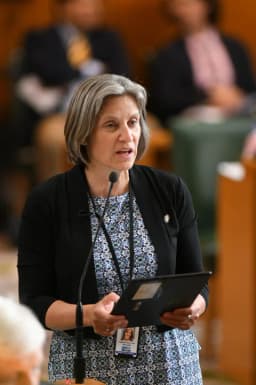 | Homes | Safety | Money | Roads |
What this office decides right now
What’s at stake
Senate District 17 covers Bethany, Oak Hills and Cedar Mill in the Beaverton School District, plus Forest Park, Linnton and Northwest Portland. A state senator is one of 30 votes on the two-year budget, on any tax increase (three-fifths) and on holding back a kicker (two-thirds), and confirms the governor’s appointees. The 2027 session opens in January with a budget gap, no durable road-funding source and shelter money that runs out in June 2027.
Each of this office’s 8 live choices is a board below, with every candidate’s stated position or the gap.
2027–29 budget gap
Federal H.R. 1 is projected to open a gap between the cost of current programs and revenue, so the Chief Financial Office told agencies on February 10, 2026 that 2027–29 requests must be revenue-neutral. September’s forecast shows a $400 million 2025–27 ending balance, $3.46 billion in reserves (9.7% of the general fund) and no kicker due on 2028 returns.
Beaverton schools
The Beaverton School District closed McKay Elementary and cut 159 full-time positions to fill a $37 million gap, using $16.6 million in reserves for the rest. Executive Order 26-06 now bars districts from cutting instructional time to balance budgets and requires districts that did to restore it by 2027–28.
Road funding
Voters repealed HB 3991’s gas-tax and fee increases in May 2026, and the 2026 session redirected existing money to close ODOT’s $297 million gap through June 2027. ODOT now projects a $200 million gap for 2027–29 and nearly 200 maintenance-job cuts; the governor’s workgroup owes recommendations for a 2027 package by year’s end.
Shelter money cliff
The statewide shelter program has $204.9 million for 2025–27, $102.5 million of it one-time money that ends June 30, 2027, and the homelessness emergency runs through January 10, 2027. The state counts 6,286 shelter beds added or kept, 5,539 people rehoused and 25,942 households kept housed since January 2023.
Data centers
About 144 data centers get roughly $450 million a year in property-tax breaks, a figure the Legislative Revenue Office called “pretty close” on September 8, 2026. Data-center deals on state land are paused through July 1, 2027, and the governor’s advisory committee owes recommendations for a 2027 bill by the end of 2026.
Deflection funding
HB 4002’s county deflection programs, run by 28 counties and six tribes in the first cycle, have $40 million for 2025–27; through August 4, 2025 the state logged 2,096 deflection events, 1,308 program entries and 277 completions. The 2027–29 budget decides whether the grants continue.
Federal enforcement
Eight immigrant-protection bills signed April 9, 2026 set rules for schools, hospitals, courts and data brokers and require officers to identify themselves; an interagency council created by Executive Order 26-04 coordinates the state’s response. The 2027 session decides what comes next.
Where they stand · eight more choices
Eight choices the 2027 Legislature faces
One question at a time: every candidate’s answer, A–Z, with its source. Open all to see who has said nothing about what.
2027 road packageVote for a 2027 transportation package that raises the gas tax and vehicle fees again?1 of 2 on recordNot found: John A N Chee
HB 3991, passed in a September 2025 special session, raised the gas tax and vehicle fees; voters repealed those increases as Measure 120 on May 19, 2026, 83% to 17%. The 2026 session redirected existing funds to close ODOT's $297 million gap through June 2027, and ODOT says it faces a $200 million gap and nearly 200 maintenance-job cuts in 2027–29.
- John A N CheeQualified general-election candidateNot found
Nothing on this exact choice in the sources we reviewed; a research gap, not a position.
- Lisa ReynoldsIncumbent senator; pediatricianVoted for HB 3991
What they did
Voted yes on HB 3991 in the Senate on September 29, 2025, the gas-tax and fee package voters later repealed.
Kicker refundLet the state keep part of a future kicker refund for wildfire or other one-time needs?0 of 2 on recordNot found: John A N Chee, Lisa Reynolds
The 2026 kicker returned about $1.4 billion; holding any of it back takes a two-thirds vote of each chamber. The September 2026 forecast puts 2025–27 personal income taxes $526 million under the kicker threshold, so no refund is due on 2028 returns; a 2026 bill to change how the kicker is calculated (HB 4125) had a hearing February 2 and died in committee.
- John A N CheeQualified general-election candidateNot found
Nothing on this exact choice in the sources we reviewed; a research gap, not a position.
- Lisa ReynoldsIncumbent senator; pediatricianNot found
Nothing on this exact choice in the sources we reviewed; a research gap, not a position.
Budget gap: taxes?Close the 2027–29 budget gap with new revenue, or with cuts alone?2 of 2 on record
The state's Chief Financial Office told agencies on February 10, 2026 that federal H.R. 1 opens a gap between current programs and revenue, and that 2027–29 requests must be revenue-neutral. In February 2026 the Legislature passed SB 1507, disconnecting from H.R. 1 business tax breaks to raise about $314 million for 2027–29 while enlarging the Earned Income Tax Credit; reserves stand at $3.46 billion.
- John A N CheeQualified general-election candidateCut taxes, no increases
Said: What they said
Says Oregon families are devastated by endless broad-based tax increases; he would dramatically reduce property taxes and eliminate taxes on family inheritances.
- Lisa ReynoldsIncumbent senator; pediatricianVoted to disconnect
What they did
Voted yes on SB 1507 on February 16, 2026, which disconnects Oregon from federal H.R. 1 business tax breaks, raising about $314 million for 2027–29, and enlarges the Earned Income Tax Credit.
Data-center limitsMake data centers pay their own way: separate power rates, an end to tax breaks, or a pause on new ones?1 of 2 on recordNot found: John A N Chee
Oregon has about 144 data centers and roughly $450 million a year in property-tax breaks, a figure the Legislative Revenue Office called “pretty close” on September 8, 2026. The 2025 POWER Act (HB 3546) put them in their own electricity rate class; the governor paused data-center deals on state land through July 1, 2027 and will bring the 2027 session a statewide framework.
- John A N CheeQualified general-election candidateNot found
Nothing on this exact choice in the sources we reviewed; a research gap, not a position.
- Lisa ReynoldsIncumbent senator; pediatricianVoted for POWER Act
What they did
Voted yes on HB 3546, the POWER Act, in the Senate on June 3, 2025; it lets regulators put data centers in their own electricity rate class.
Shelter fundingKeep paying for state-funded shelter beds and the homelessness emergency after June 2027?2 of 2 on record
The statewide shelter program created by HB 3644 (2025) has $204.9 million for 2025–27, half of it one-time money that expires June 30, 2027; Executive Order 26-01 extends the homelessness emergency through January 10, 2027. The state counts 6,286 shelter beds added or kept and 5,539 people rehoused from January 2023 through September 2025.
- John A N CheeQualified general-election candidateProsecute vagrancy
Said: What they said
Would prosecute vagrancy and open drug use; he does not say whether the state should keep funding shelter beds.
- Lisa ReynoldsIncumbent senator; pediatricianVoted for shelter bill
What they did
Voted yes on HB 3644 on June 26, 2025; her site says she voted for record shelter and housing funding and supported rent relief and eviction moratoriums.
Drugs: deflectionKeep the 2024 approach of recriminalized possession plus county deflection programs, and fund them in 2027–29?2 of 2 on record
HB 4002 (2024) made drug possession a misdemeanor again on September 1, 2024 and created county deflection programs, run by 28 counties and six tribes in the first cycle and funded with $40 million for 2025–27. Through August 4, 2025 the state logged 2,096 deflection events: 1,308 people entered a program, 277 completed one and 630 did not.
- John A N CheeQualified general-election candidateProsecute open drug use
Said: What they said
Would prosecute open drug use; he does not say whether counties should keep deflecting people to treatment before charges.
- Lisa ReynoldsIncumbent senator; pediatricianVoted for HB 4002
What they did
Voted yes on HB 4002 in the House on February 29, 2024; her site calls for markedly more treatment and interrupting the fentanyl supply.
Wildfire moneySpend more state money on wildfire prevention and firefighting?1 of 2 on recordNot found: John A N Chee
Fires burned a record 2.5 million acres in Oregon in summer 2026. HB 3940 (2025) taxes oral nicotine and moves 20% of Rainy Day Fund interest into two wildfire funds, which the Legislative Revenue Office put at about $43 million for 2025–27 and $63 million for 2027–29, and raises the timber harvest tax; SB 83 (2025) repealed the statewide wildfire hazard map.
- John A N CheeQualified general-election candidateNot found
Nothing on this exact choice in the sources we reviewed; a research gap, not a position.
- Lisa ReynoldsIncumbent senator; pediatricianVoted no: HB 3940
What they did
Voted no on HB 3940 on June 26, 2025, the bill that taxes oral nicotine products, raises the timber harvest tax and moves Rainy Day Fund interest to wildfire prevention funds.
Sanctuary lawKeep adding state limits on federal immigration enforcement, on top of Oregon's sanctuary law?1 of 2 on recordNot found: John A N Chee
Oregon's 1987 sanctuary law and the 2021 Sanctuary Promise Act bar public resources for immigration enforcement without a judicial warrant. The 2026 session passed eight more bills, signed April 9, 2026, including HB 4138, which requires officers to identify themselves and limits masks (House 36–19, Senate 18–10), and SB 1570, which requires hospitals to set policies for law-enforcement visits.
- John A N CheeQualified general-election candidateNot found
Nothing on this exact choice in the sources we reviewed; a research gap, not a position.
- Lisa ReynoldsIncumbent senator; pediatricianVoted for HB 4138
What they did
Voted yes on HB 4138 on March 5, 2026; her statement cites policies protecting patients in hospitals, children in schools and people in their homes from the Trump administration.
About this race
What this office can do
The Legislature adopts state laws, taxes and budgets, including school funding, healthcare, housing rules and transportation. Most legislation needs both chambers and the governor, or a veto override. An individual legislator cannot order a local agency to act.
How this list was made
Same questions for everyone, A–Z. Each chip is our short reading of a sourced statement; we do not endorse, rank or score.
Reviewed September 18, 2026 · lines 2026-09-19.1 · AI-assisted, human review pending
Terms explained
- Amendment
- A proposed change to a measure before the final vote. Voting for an amendment is not the same as voting for the whole measure.
- Supplemental budget
- A mid-year change to the city budget after the main budget is adopted.
- Appropriation
- Permission to spend money on something. It does not mean the money has been spent or the result achieved.
- PCEF
- The Portland Clean Energy Fund: a tax on large retailers that pays for climate projects. Council has debated using its interest for other services.
- Term sheet
- Starting terms for a negotiation. Approving one is not a final contract.
- Housing owned by the public or a nonprofit and rented at controlled prices.
- CEI Hub
- The fuel-storage area along the Willamette in Northwest Portland, where Zenith Energy operates.
- Ranked choice
- You rank candidates in order. If your first choice is eliminated or already elected, your vote counts toward your next choice.