
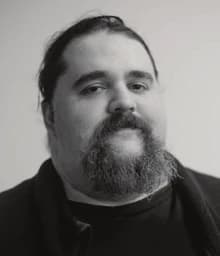
District 4 candidate · Portland City Council · November 3, 2026
Timothy (TJ) Anderson
Student and disability advocate with county advisory and budget-committee experience.
Reach the campaign
As published in their pamphlet statement.
In their words
Said: Portland is at a crossroads, and many people are unhappy with the direction our city is taking.
Pamphlet p. 65
Candidate statement · November 2026 edition; extracted September 20, 2026
Multnomah County voters’ pamphlet · PDF page 65 ↗Verbatim opening of the candidate's own statement; publication by the county does not verify the claims.
The verbatim opening of their voters’ pamphlet statement, the same rule for every candidate. We chose nothing.
What they say they would do
Our summary of their platform, in our wordsRuns on listening, lived experience of homelessness and disability, and practical public service.
- Bring community and budget-committee experience to Council.
- Listen across neighborhood and political differences.
- Focus on whether city institutions work for residents.
Our reading
Our interpretation, not their wordsHis pamphlet statement makes a case for representation informed by homelessness and disability; his emailed answers add an audit-first program: map city spending and assets before any new tax or fee, more officers with lower-cost responders for routine calls, and housing growth through investability and reuse of city assets. His second reply answers most of the Council’s choices in a word or two, including public money for the Moda Center capped at $60 million. Beyond the audit’s $5 million cap, the costs and the mechanics of a Council pay freeze are not yet specified.
Where they stand
Rent and homes
Investment, reused assets- What
- Said: Wants more housing and says the fastest route may be making the city more investable, for large accounts and for people who want to make Portland home, alongside reusing city assets at lower cost for short-term help; opposes committing to a single plan.
- How
- Said: Reuse city assets at lower cost for short-term help; longer term, make the city more approachable and investable for large accounts and for people who want to make Portland home.
- Measured by
- Not in their sources
Camps, crime and who responds
Officers plus cadets- What
- Said: Wants police response times down and says more officers will be needed, with cadets, volunteers and other programs handling calls that do not need the most highly trained officers. On homelessness, would first establish what has worked, a timeline of people’s needs and how to work with others in the city before spending more.
- How
- Said: More officers, with calls that do not need the most highly trained officers handed to a combination of cadets, volunteers and other programs as appropriate.
- Measured by
- Said: Police response times coming down.
Your bills and taxes
Audit first, no taxes- What
- Said: Would start with a value-based audit of where city money went this year and the past two, plus a public list of city assets, at a cost he puts at no more than $5 million, with no new taxes or fees until it is done. Would freeze Council pay and benefits until average salaries and jobs have grown for two full years, and ask each councilor for 100 hours of volunteer work a year.
- How
- Said: A value-based audit of where city money went over three years, a public list of city assets, no new taxes or fees until it is done, and a Council pay freeze until salaries and jobs grow for two years.
- Measured by
- Said: Puts the audit at no more than $5 million; would test average salary and job growth every six months, lifting the pay freeze only after two full years of growth.
Streets, buses and air
Green tech, more transit- What
- Said: Would favor climate measures that also improve business investability, and wants more public transit and better train systems while leaving cars to those who want or need them, without burning future finances for what is wanted now.
- How
- Said: Favor climate measures that also help business investability, and add public transit and better train systems while leaving cars to those who want or need them.
- Measured by
- Not in their sources
The choices this office faces
Every candidate in this race is asked the same 8 questions. Timothy (TJ) Anderson is on record on 7, with 1 still open. A question without an answer is a research gap, not a position.
No answer we could findKeep the monthly street repair fee?
Nothing on this exact choice in the sources we reviewed.
Public money and terms for renovating the Moda Center?
Said: Answered yes to public money for the Moda Center renovation, at no more than $60 million.
Raise new revenue, or hold the line on taxes and fees?
Said: Says no additional taxes or fees would be passed until a value-based audit shows where the city’s money has gone.
Hire more sworn officers, or invest first elsewhere?
Said: Says more officers are “pretty much a given” to get response times down, with cadets, volunteers and other programs handling calls that do not need the most highly trained officers.
Keep funding camp removals at current levels?
Said: Answered yes when asked whether to keep funding camp removals at current levels.
Restrict new AI data centers in the city?
Said: Answered yes when asked whether to restrict new AI data centers in the city.
Expand Portland Street Response to a full 24/7 role?
Said: Answered no to a full 24/7 Street Response “not without additions,” without yet saying what those additions would be.
Raise water bills to pay for the Bull Run filtration plant and system repairs?
Said: Answered no when asked whether to raise water bills to pay for the Bull Run filtration plant and system repairs.
Their answers to our questions
Three policies and what each would cost
Said: First would be a value-based audit and investigation of where our money went over this year and the past two years as a starting point. [...] I would expect that to cost no more than $5 million. [...] While this is going on, no additional taxes or fees would be passed until we figure out where everything is going. Second would be [...] a resolution that each councilor would put in 100 hours of volunteer work per year while they are on council. [...] Third would be that until the City of Portland is back to growth in average salaries and jobs for at least two full years, with tests done every six months, benefits and the pay structure for City Council would be frozen at current levels.
Housing affordability and production
Said: We need more housing, and the fastest way could be to make the city more investable, but there may also be ways we could reuse city assets to help with it. [...] Reuse city assets at a lower cost for short-term help, and for the long term, we need to make the city more approachable and investable, not just to big accounts but to people who want to make Portland a home.
Public safety
Said: Get police response times down. We will need more officers. That is pretty much a given. But if we can find ways to handle issues that may not need our most highly trained officers and instead give those responsibilities to a combination of cadets, volunteers, and other programs as appropriate, we can work on getting response times down faster.
Homelessness
Said: Spending money without thought is not helping. We need to figure out what has been working, what has not, and work with urgency because there are people who need help. But there are also citizens who do not want to see their taxes wasted, so first a clear understanding of what got us hear, a timeline of peoples needs through homelessness and a method to best work with others in the city to accelerate it and covering what needs remain.
City spending and revenue
Said: Get it under control. We have enough to do what we need with what we have, or at least get a full view of what we need before asking for more. Revenue is in the same boat. When revenue is not growing, we are not growing our tax base, and that means what we have available for next year will generally be smaller than this year's budget.
Climate, transportation and environmental health
Said: I think we can use this to help our business investability. [...] It is good for both, and we can use those areas of focus that benefit multiple things to help our climate efforts. [...] We are always going to have some cars and trucks, but I would like to see more public transit and better train systems. Leave cars for those who want them and those who need them for their services. Don’t burn our finances for the future for what we want now.
Advisory and budget-committee work
Said: As chair for the Department of County Assets and Management, I helped bring the group's thoughts together toward the budget recommendations for our department and the projects being considered. [...] TriMet Committee for Accessible Transportation: We have gone through information related to recent cuts, trying to make sure the lowest number of people would be affected, as changes to the TriMet service area are also reflected in paratransit. [...] Tuition Review Advisory Committee at Portland State: As a student, we voted on a recommendation for an 8% tuition increase for students. [...] The 8% vote in our group passed 5-4 as a recommendation. The finance board ultimately felt it was not a move they could make.
The Council’s choices, in short
Said: I will say I’m not going to lock in to a lot with a full board view, so there is a lot I’m not going to see, but if we need the short list: [Moda Center] Yes, but no more than 60 million. [Clearing camps] Yes. [Data centers] Yes. [Street Response] No, not without additions. [Water rates] No. [Street repair fee] Need more info; not going to give a short answer.
Council votes
No Council vote yet. That is not a judgment about experience.
A question the evidence leaves open
How would the $5 million audit be funded, and what would its findings change first?
Sources (2)
- Multnomah County voters’ pamphlet · PDF page 65Candidate statement · November 2026 edition; reviewed September 18, 2026Written by the candidate or campaign. Publication by the county does not verify the claims.
- Anderson · emailed response to the Lab’s questionsCandidate statement · Received September 19, 2026Written by the candidate in reply to the Lab’s questions and kept on file; excerpts appear on his brief. Receipt does not verify the claims.