
Which building deserves the next dollar of diligence?
Owners and development teams bring us a property, or a portfolio, and a decision. We screen it against the public record and hand back an evidence packet: what is known, what is missing, and what to do next. It is the step before you pay an architect, an engineer, or a broker to look.
- 01
The public record, assembled
Parcel and ownership history, zoning and overlays, historic status, development capacity, permit history, assessment, and the programs that apply. Every claim is cited to its document.
- 02
What we're unsure of
Each material claim is graded by how well it is supported, and where a specialist is needed we say which one, so the next dollar of diligence goes where it matters.
- 03
The decision, laid out
The uses that are plausible, the constraints that actually bind, and the approvals in order. Written so the owner, the lender, and the design team read it the same way.
- 04
The next three moves, with dates
What to do first, second, and third, and the date each one depends on.
What you get back.
Our public downtown model shows what every parcel could become. A screening turns that into an answer about your building.
- 01
The public record, assembled
Parcel and ownership history, zoning and overlays, historic status, development capacity, permit history, assessment, and the incentive programs that apply to this address. One packet, every claim cited to the document it came from.
- 02
A register of what we're unsure of
Each material claim is graded by how well it is supported. The questions only a specialist can answer are listed, along with which specialist, so the next dollar of diligence goes where it matters.
- 03
The decision, laid out
The uses that are plausible, the constraints that actually bind, the approvals in order, and the next three moves with dates. Written so the owner, the lender, and the design team read it the same way.
- 04
A maintained record, if the decision keeps moving
Assumptions, deadlines, specialist findings, and decisions kept current in one place, with a monthly review. Sold only where the portfolio actually needs it.
What it is not
- Not an appraisal or a valuation
- Not a structural, environmental, or building-condition assessment
- Not a market study, a lease analysis, or a construction estimate
- Not a guarantee of any approval, incentive, or timeline
Specialist work is scoped and priced separately, and the packet names which specialist each open question needs. We will tell you when a screening is not the right purchase.
The same starting prices for every client.
These are starting points rather than quotes. The final number depends on the size of the site or portfolio and how hard the decision is, and you have it in writing before any work starts. Private work is billed with a deposit up front and milestones after that.
One property
From $7,500Two to three weeks on one building or site and one decision, scoped to how hard the decision is. Complete in itself: the packet, the register, and a working session to walk through it.
A portfolio of about ten
From $20,000The same screening across a defined set of parcels, ranked, so the properties that deserve real diligence surface first and the rest get a documented reason to wait.
Inside a partner's assignment
Priced from the daysA data, analysis, or reporting package within a consultant's or design team's scoped project, quoted with the partner, with one lead contract and written responsibilities.
Maintained portfolio record
From $2,500 / monthAssumptions, deadlines, specialist findings, and decisions kept current, with a monthly review. Only where the decisions keep moving.
Larger programs, such as a district-wide or consortium-funded screening, are costed from the team and the scope and appear here when they become standard offerings.
Four steps, about three weeks.
- 01
Tell us the property and the decision
An address or a list, and the question you are trying to answer: sell, hold, convert, expand, or walk away. Twenty minutes.
- 02
We screen and assemble
Two to three weeks against the public record and the downtown model. Where the record is silent, the packet says so instead of guessing.
- 03
You get the packet and a working session
The evidence, the register, and the next three moves, walked through with the people who will act on it.
- 04
The record stays current, if you want it to
For a portfolio with live decisions, we keep the record and run a monthly review. For a single decision, the engagement ends here.
You can try the public version now.
The downtown model and the permits tool are free, and they are built from the same records we screen against. They are the inputs, not the deliverable.
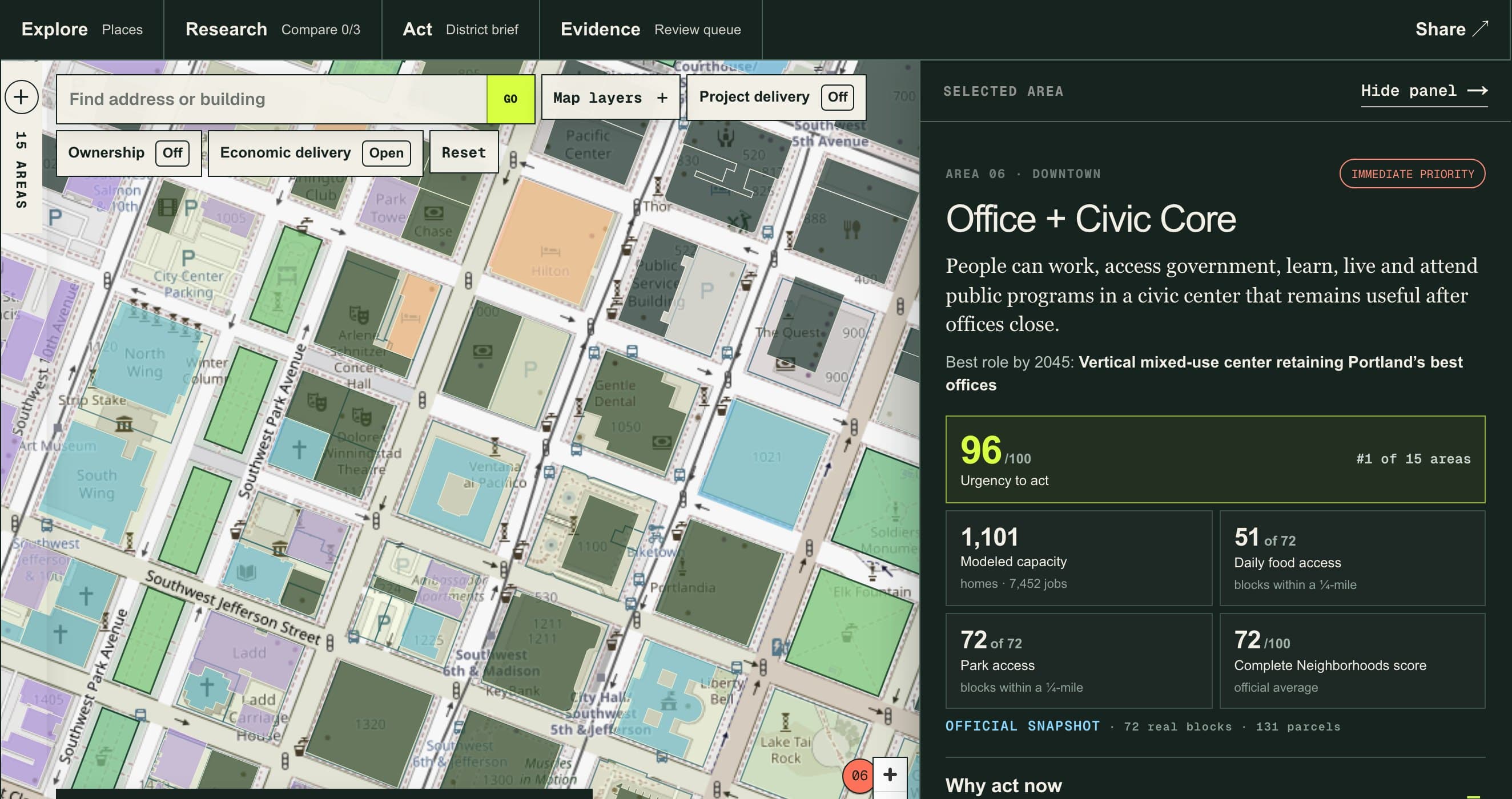
Every parcel downtown, what it is, and what it could become.
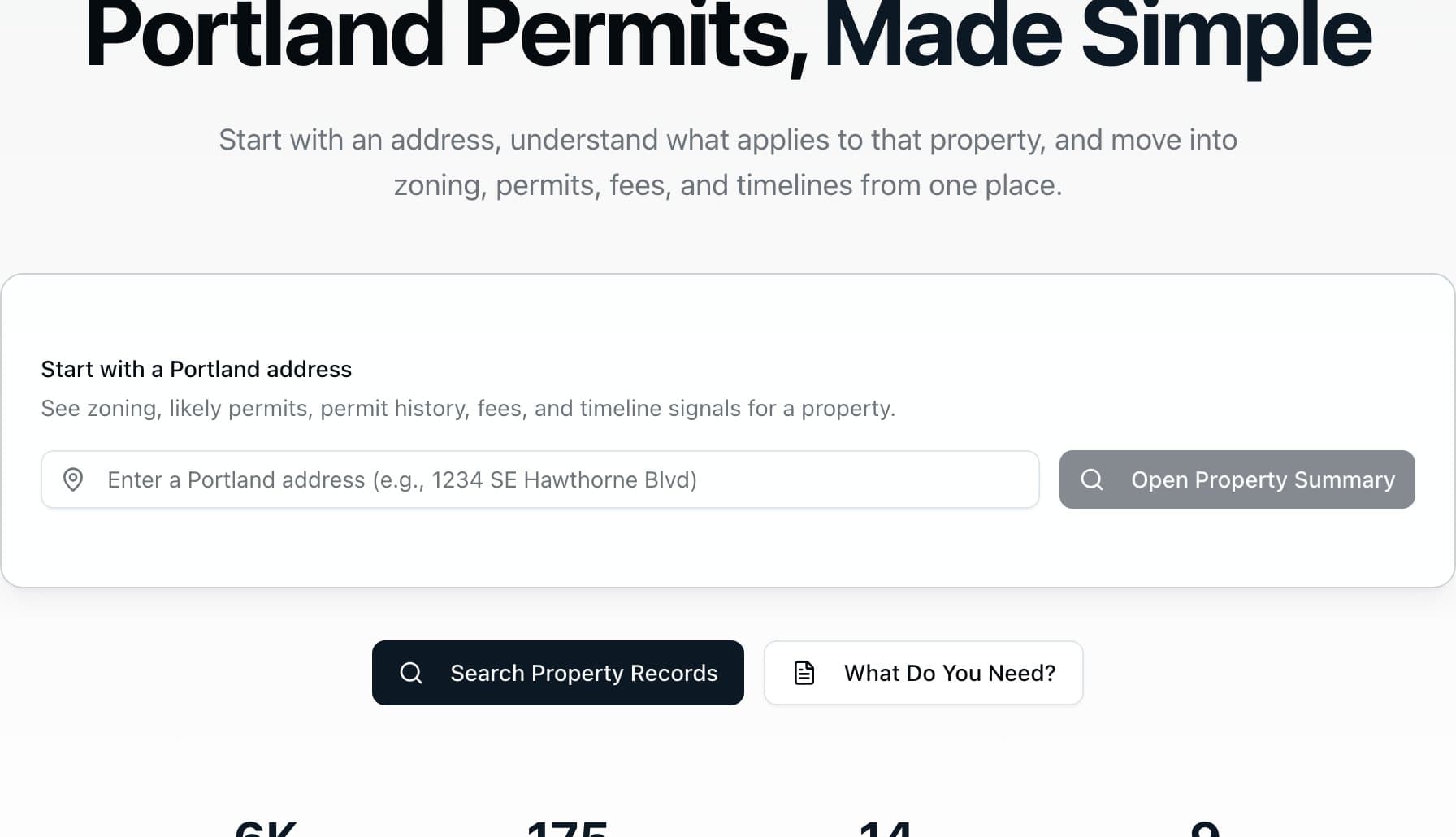
Zoning, likely permits, fees, and timelines for an address.
A sample packet
Not published yet.
Nobody has hired us for a screening yet, so there is no redacted packet to show you. The four parts are at the top of this page, and we will walk you through the format on a call. When a client agrees to it, a sample goes here.
Ask for a walkthrough