
The decisions cross bureau lines. The information doesn't.
Where the money goes, which projects slip, and what is waiting on whom are questions that cut across teams, systems, and bureaus, and the records for them rarely do. Portland reorganized its bureaus into service areas in 2025, but the records they run on stayed where they were. We keep the record your decisions depend on, as a service you can start using next month.
A public-source example
CED Portfolio Map
The work across bureau lines, connected to decisions and outcomes.
Sep 10, 2026
Portland’5 operator transition: Operator procurementTwo exploratory decisions move to history; proposals now have a deadline.
Sep 9, 2026
PSU venue & Keller future: Planning authorizedNew capital commitments still require Council approval.
Sep 3, 2026
Rose Quarter / Albina redevelopment: Negotiations authorizedThe authorization is complete; the development agreement is still a separate decision.
Record checked Oct 3, 2026 · Independent demonstration, not authoritative City status.
Four things we do for institutions.
The first one is the main service. The others are how an engagement usually starts, what it produces, and how the results get checked.
- 01
The maintained record
One record of what your bureau owns, promised, and owes: assets, agreements, decisions, and dates, reconciled from public and provided records and kept current, with every line sourced. Your monthly review runs from it. We do the reconciling; your staff never maintain a second tracking system.
Flagship · $100,000 to $180,000 a year, after a pilot
- 02
Diagnostics and decision analysis
One hard question at a time: the factual baseline, the options actually available, what each one costs, and a decision memo written to survive legal review, budget review, and a hostile hearing.
Four to six weeks · from $15,000
- 03
Civic data products
Atlas-class data products for your domain: inventories, conditions, service levels, outcomes. Built the way we build our own dashboards and the Parks Atlas: source-linked, public, and honest about gaps.
Priced by scope
- 04
Independent evaluation
Did the program work? Mixed-method evaluation with published methodology. Where independence demands it, an outside evaluator of record signs the result. We don't grade our own homework.
Outside evaluator of record where needed
The same prices for every buyer.
These are ranges rather than quotes. Where the number lands depends on the size of the portfolio and the scope, and it stays inside the range. We price to what the work is worth, not to a procurement threshold.
Diagnostic
$15,000–$25,000Four to six weeks on one question. Complete in itself: evidence, options, and a recommendation you can act on with or without us.
Maintained-record pilot
$40,000–$90,000A bounded pilot sized to one portfolio: the reconciled baseline, the kept record, facilitated monthly reviews, and a written evaluation at the end. Every pilot closes with our honest recommendation: continue, change, or stop.
Ongoing maintained record
$100,000–$180,000 / yearCompetitively procured and itemized into three components, so you buy only what you use. The components add up to the annual band; priced by portfolio size and scope after a pilot has proven the value.
- Data infrastructure & tools$20–40K
- Portfolio data stewardship$30–60K
- Review and briefing service$50–80K
Custom analysis and new modules are scoped and priced separately, and appear here when they become standard offerings. Property owners and development teams have their own practice and price list on the property page.
You can see the same kind of record on this site.
The Parks Atlas tracks 316 parks and their partners. The downtown model covers 5,275 parcels. The performance cockpits follow the City's own measures. All of it is free and built from public data, using the same methods we use for paid work.
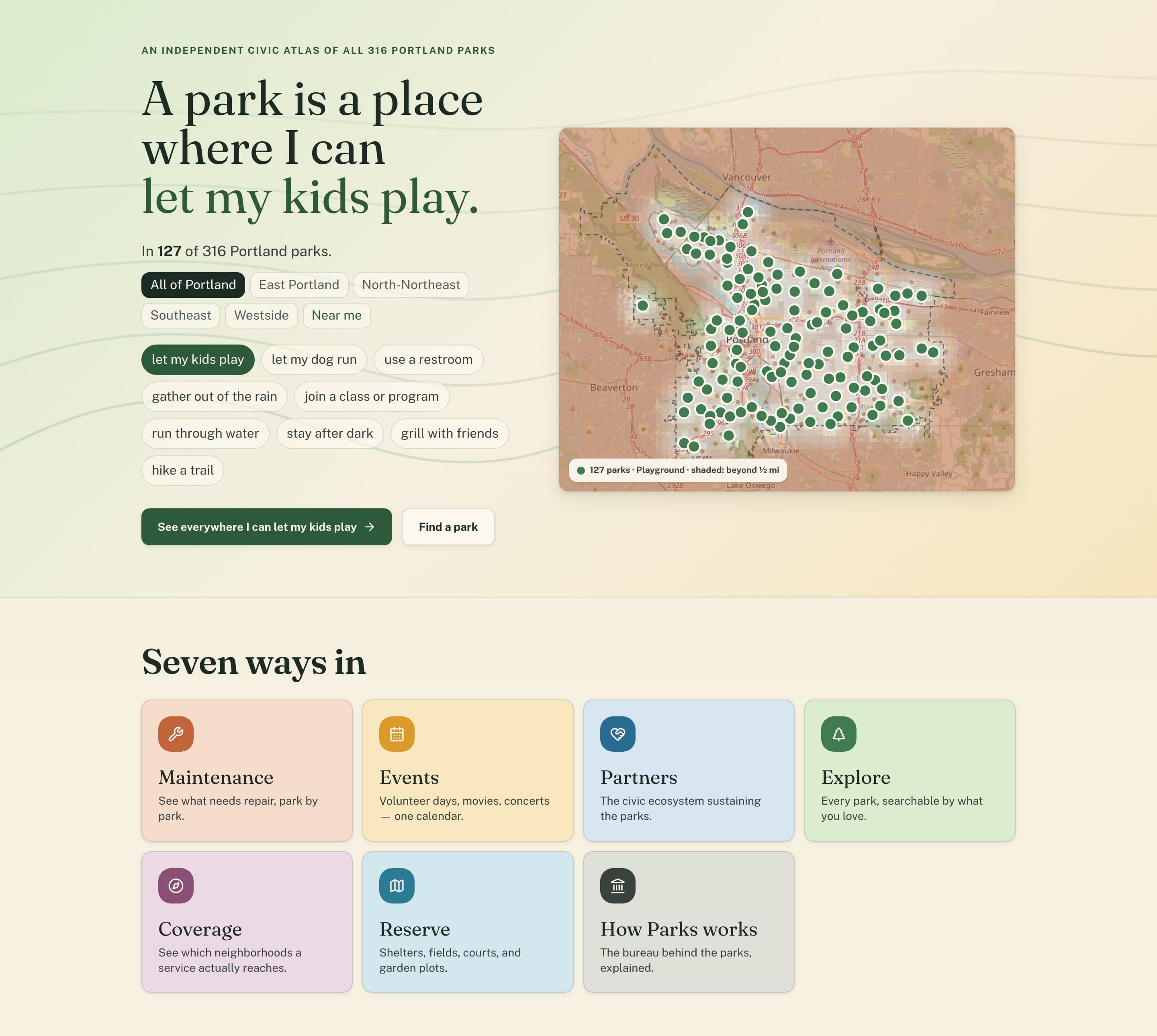
A kept record of every park, its condition, and its partners.
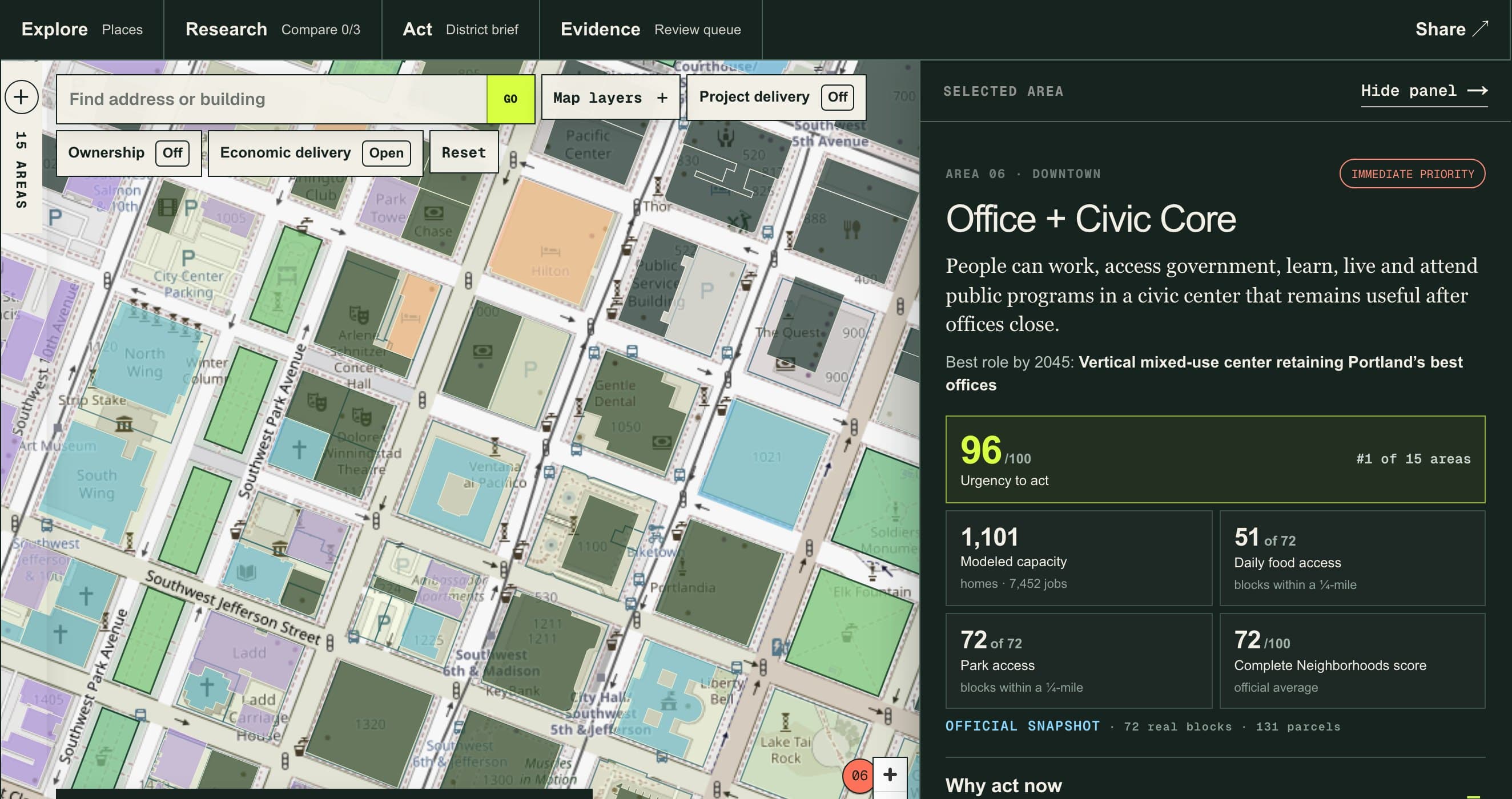
A kept record of what every downtown parcel is and could become.
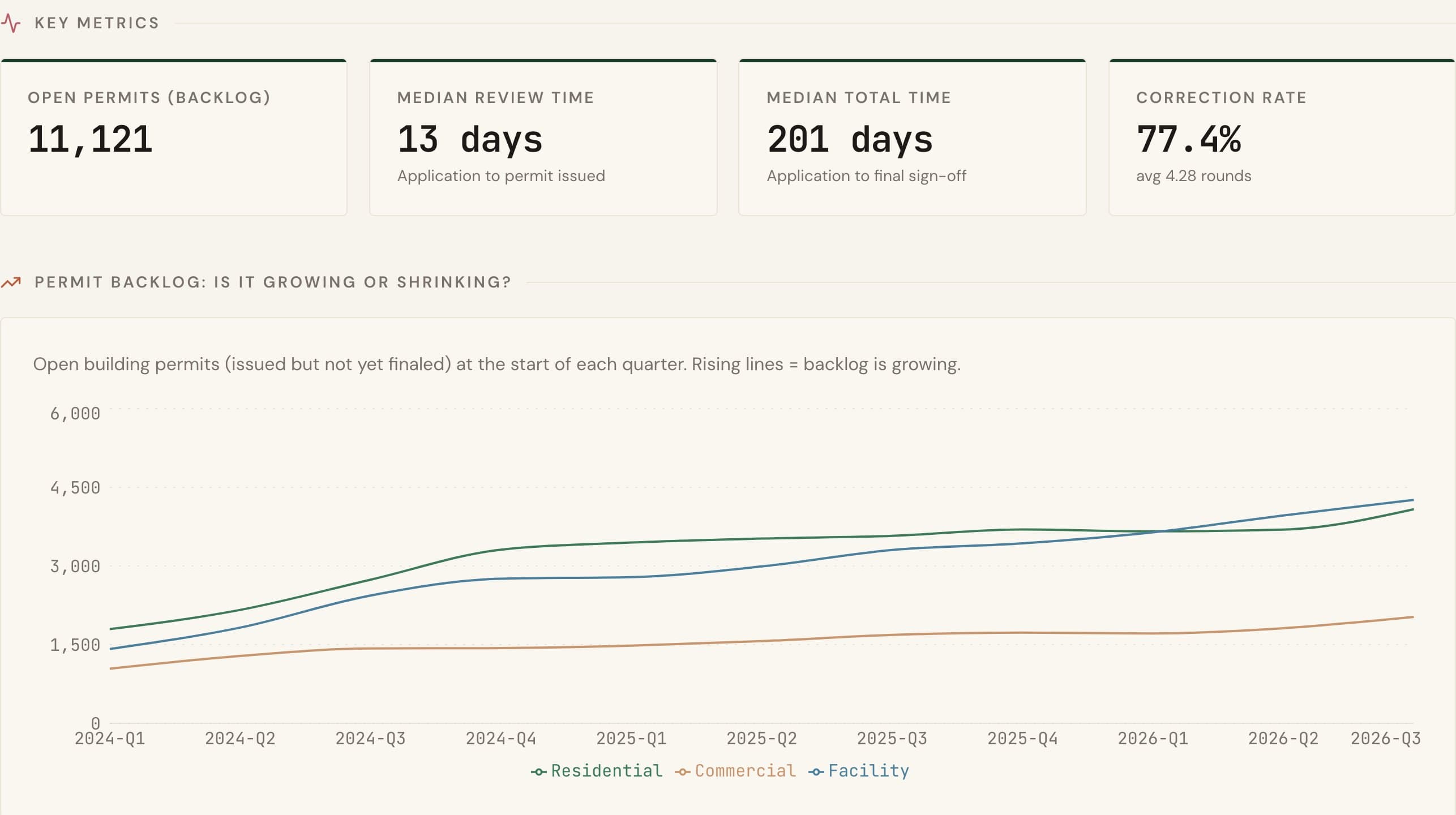
The City's own measures, every source linked, updated as they publish.