
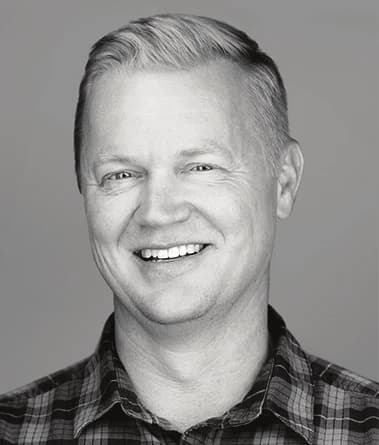
District 4 candidate · Portland City Council · November 3, 2026
Eli Arnold
Portland bicycle police officer and military veteran.
Reach the campaign
- eliforportland.com (opens in a new tab)
- info@eliforportland.com
- Contact form (opens in a new tab)
- Instagram (opens in a new tab)
- Facebook (opens in a new tab)
- X (opens in a new tab)
As published in their pamphlet statement and campaign site.
In their words
Said: I’ve dedicated my life to hard work and serving others: As a community police officer, Army combat veteran, progressive Democrat and father of four.
Pamphlet p. 65
Candidate statement · November 2026 edition; extracted September 20, 2026
Multnomah County voters’ pamphlet · PDF page 65 ↗Verbatim opening of the candidate's own statement; publication by the county does not verify the claims.
The verbatim opening of their voters’ pamphlet statement, the same rule for every candidate. We chose nothing.
What they say they would do
Our summary of their platform, in our wordsPairs stronger frontline safety services with a no-new-taxes pledge and support for fareless transit.
- Prioritize police, fire, dispatch and behavioral-health staffing.
- Move people from tents into housing, shelter and services.
- Use existing clean-energy resources toward fareless transit.
Our reading
Our interpretation, not their wordsHis program expands safety capacity while pledging no new taxes and promoting fareless transit. Those commitments compete for existing money; a complete funding plan and regional agreements would determine what can be delivered together.
Where they stand
Rent and homes
Fill subsidized vacancies- What
- Said: Proposes faster filling of subsidized vacancies, stronger screening and pre-placement stabilization, incentives for small builders, and deferring development charges until occupancy or sale.
- How
- Said: Would set a 120-day maximum for residential permits, with fees reduced or refunded if missed, defer system development charges until occupancy or sale, and require subsidized vacancies filled within 60 days.
- Measured by
- Said: Vacant subsidized units (about 1,900 today, he says) filled within 60 days, residential permits decided within 120 days, and public vacancy reporting from every subsidized provider.
Camps, crime and who responds
Police-clinician teams- What
- Said: Would add four police-clinician behavioral-health units, increase detective and traffic staffing, and expand neighborhood response teams, coordinated with Street Response.
- How
- Said: Would create four police behavioral-health units pairing crisis-trained officers with clinicians, hire incrementally, restore three-person fire staffing and modernize dispatch triage, phased from 2027 through 2032 and beyond.
- Measured by
- Said: A phased path toward about 1.5 officers per 1,000 residents (from 1.27), with faster response and shorter queue times reported publicly; cites a roughly $37M-a-year cost estimate by 2035.
Your bills and taxes
Small-business tax relief- What
- Said: Proposes raising the small-business exemption to $150,000 and a three-to-five-year tax holiday for new small businesses.
- How
- Said: Would raise the small-business income exemption from $100,000 to $150,000, make it permanent and inflation-indexed, seek County alignment, and offer a three-to-five-year tax holiday to new small businesses.
- Measured by
- Not in their sources
Streets, buses and air
Phased fareless transit- What
- Said: Supports phased fareless transit and incremental CEI Hub safety improvements, including easier decommissioning of unused petroleum tanks.
- How
- Said: Would fund fareless transit from a portion of Portland Clean Energy Fund revenue (he cites about $200M a year against $63.65M in TriMet fares), through a City–TriMet–PCEF task force in the first 100 days.
- Measured by
- Said: Tracks ridership growth, emissions and vehicle miles reduced, cost per added rider and rider satisfaction, with fares gone systemwide by year two; cites 20%-plus ridership gains elsewhere.
The choices this office faces
Every candidate in this race is asked the same 8 questions. Eli Arnold is on record on 4, with 4 still open. A question without an answer is a research gap, not a position.
No answer we could findKeep funding camp removals at current levels?
Nothing on this exact choice in the sources we reviewed.
Restrict new AI data centers in the city?
Nothing on this exact choice in the sources we reviewed.
Keep the monthly street repair fee?
Nothing on this exact choice in the sources we reviewed.
Raise water bills to pay for the Bull Run filtration plant and system repairs?
Nothing on this exact choice in the sources we reviewed.
Public money and terms for renovating the Moda Center?
Said: Told the NW Examiner that securing the best possible deal with public funds is important but moving forward on the renovation is also crucial, to keep Moda’s economic activity, tourism and jobs.
Raise new revenue, or hold the line on taxes and fees?
Said: Says he will not support raising taxes and fees; his transit plan is framed as using existing PCEF revenue without new taxes.
Hire more sworn officers, or invest first elsewhere?
Said: Says there would be no immediate increase to police funding; once vacancies are filled he would seek more authorized positions if the budget can accommodate it, toward the roughly 1.5 officers per 1,000 residents on his site.
Expand Portland Street Response to a full 24/7 role?
Said: Would expand Street Response scope in 2027–2028 and citywide by 2029–2031 so calls go to the right responder; 24/7 is not stated.
Their answers to our questions
How would expanded staffing and transit commitments fit within existing revenue?
Said: No immediate increase to police funding. When vacancies are filled I would seek to increase authorized staffing if the city budget can accommodate. For fareless transit I would seek to use PCEF as a stable funding source. Total TriMet fare revenues are about $60 million, but only a portion of that is Portland. I would be seeking to redirect a portion of future revenue.
Policing work: the downtown fentanyl partnership
Said: When street fentanyl sales became ubiquitous downtown I developed a program in which police partnered with organizations [to] identify high volume dealers. We established a relationship with Federal Prosecutors to hold high volume dealers accountable in 2023. This has resulted in dozens of successful prosecutions and a decline in the fentanyl trade downtown.
Policing work: the Provider Police Joint Connection Program
Said: During Measure 110 I was concerned about the lack of meaningful interventions for people with serious addictions who were using drugs on the street downtown. The Portland Police Bureau Bike Squad and MHAAO partnered to bring peer support workers immediately to the scene and attempt to place people into treatment. The Provider Police Joint Connection Program was a success and was ultimately funded by the City, County, and State.
Council votes
No Council vote yet. That is not a judgment about experience.
A question the evidence leaves open
How would expanded staffing and transit commitments fit within existing revenue?
Sources (6)
- Multnomah County voters’ pamphlet · PDF page 65Candidate statement · November 2026 edition; reviewed September 18, 2026Written by the candidate or campaign. Publication by the county does not verify the claims.
- Arnold · detailed issue platformCandidate statement · Website reviewed September 18, 2026Campaign position. Claimed results and numerical premises have not automatically been independently verified.
- Arnold · emailed response to the Lab’s questionsCandidate statement · Received September 20, 2026Written by the candidate in reply to the Lab’s questions and kept on file; excerpts appear on his brief. Receipt does not verify the claims.
- The Oregonian · Portland police and FBI target fentanyl dealersReporting · August 2026Cited by the candidate for the downtown fentanyl enforcement partnership he says he developed in 2023.
- KATU · Federal officials detail a three-year downtown fentanyl crackdownReporting · 2026Cited by the candidate for the same partnership; the report describes the crackdown, not his individual role.
- OPB · Police and drug-treatment providers’ pilot program will continueReporting · April 10, 2024Cited by the candidate for the Provider Police Joint Connection Program with the Bike Squad and MHAAO.