
Fire in Oregon
Why do we fight some fires
and deliberately light others?
Fire can kill trees, leave large trees alive, or help keep a prairie open. The result depends on the place, the conditions and what burns. Follow the fire from the ground to the treetops, see what people can change, and examine what those choices cost.
Start the storyStart at the ground. Follow the flames.
Dead needles, grass, branches and shrubs can all burn. In a forest, a surface fire moves through fuel near the ground. Small trees and low branches can give it a path into taller trees. Wind can also carry burning embers ahead of the flames.
That is why the arrangement of plants matters as well as the amount of fuel. Moisture, wind and slope influence how a fire behaves. People can change some fuels and choose the conditions for a planned burn; a wildfire arrives on its own timetable.
Flames have a path upward.
Shrubs and small trees can carry fire into higher branches. These are called ladder fuels.
More space below the crowns.
Removing some small trees and burning surface fuel can reduce that path. Keeping flames low still depends on the conditions.
How much energy does it release?
What happened to trees, soil and habitat?
Two different questions: how does the fire behave, and what does it change?
Sources for this chapter
Now put that fire in a different landscape. The same process can have a very different result.
Oregon has more than one relationship with fire.
In many dry pine forests, recurring surface fires helped keep stands open. In oak and prairie habitat, fire can help keep shrubs and trees from taking over. Some wetter forests have long fire intervals; western Oregon also contains places with much more frequent fire histories.
Sagebrush adds another complication: invasive annual grasses can encourage repeated fire and change habitat. Choosing what to do starts with the plants, local history and conditions of the place—not a rule for the whole state.
Dry pine forests
Recurring surface fire can help keep space beneath large trees.
Western forests
Local moisture and history shape very different fire patterns.
Oak & prairie
Keeping habitat open can be the purpose of burning.
Sagebrush
Repeated fire and invasive grasses can change the habitat.
Choose the habitat and the outcome before choosing the treatment.
To understand the conditions we see today, we also need to understand how they developed.
Today’s landscape has a history.
Lightning and Indigenous burning have long shaped Oregon landscapes. Indigenous stewardship includes deliberate choices about plants, habitat and cultural relationships. Colonization disrupted that stewardship; grazing, logging, roads, settlement and fire suppression also changed many places.
Those histories interact with today’s climate and weather. The useful question is not simply whether a forest looks denser than an old photograph. It is what changed at this particular place, why it changed, and which conditions we can influence now.
A scar can record a past fire. Dated tree rings help researchers reconstruct a site’s fire history.
People used fire.
Indigenous stewardship shaped plants, habitats and cultural relationships.
Land use changed.
Colonization, grazing, logging, roads and settlement changed many landscapes.
Recurring fire was excluded.
In many frequent-fire forests, vegetation and fuels accumulated differently.
Today’s conditions keep changing.
Climate, weather and community exposure shape present-day decisions.
A photograph shows a view. Tree rings, land-use records and local knowledge help explain its history.
History helps explain the problem. A present-day objective tells us what the work is meant to achieve.
A prescribed burn starts with a purpose.
Managers choose a desired outcome, then plan how to reach it. The work might involve cutting small trees, handling branches left on the ground, preparing boundaries, or burning under selected conditions. A burn needs suitable weather, fuels, smoke conditions, people and equipment.
At OSU’s McDonald-Dunn Research Forest, the October 2025 Woodpecker burns had two different goals: supporting oak and madrone in one unit, and Willamette Valley ponderosa pine in another. The reason for burning was tied to the vegetation managers wanted to keep.
Give oak and madrone room.
Support valley ponderosa pine.
- 01
Choose
Define what should change.
- 02
Prepare
Arrange fuels and boundaries.
- 03
Wait
Match weather, smoke and capacity.
- 04
Burn
Record what actually happened.
- 05
Revisit
Measure results and maintain.
Why “units burned” and “ignitions” are different numbers
ODF’s 2025 forestland smoke report lists 2,717 burned units and 3,941 ignitions. A unit can have more than one ignition. The report also records 179,230 acres; acreage and burn-method definitions matter when comparing work. Read the report, page 2 ↗
Follow Woodpecker’s planning and burn →Read OSU’s account
Planning, preparation, ignition and follow-up are different parts of the work.
Having a purpose does not establish a result. The next question is what the evidence shows after the work.
Does earlier work change a later wildfire?
Researchers can compare treated and untreated areas reached by wildfire. A 2024 review combined evidence from 40 studies in western US conifer forests. Several treatments involving burning were associated with substantially lower subsequent severity in the analyzed seasonally dry forests.
These findings concern what happened where wildfire reached the work. They do not mean that the same percentage of fires was prevented. Treatment type, age, study methods and the landscape matter when interpreting the result.
How much lower was severity in the analyzed treated areas reached by wildfire?
How to read these averages
The review combines several severity measures. Individual results vary; the full paper provides uncertainty intervals and methods. It did not establish statistically different overall effects among these three treatment categories. The bars show reported means, not a forecast for an individual project.
| Treatment | Mean reduction |
|---|---|
| Prescribed burning | 62% |
| Thinning + pile burning | 62% |
| Thinning + prescribed burning | 72% |
Lower fire severity is a measured effect. Its value depends on the trees, habitat and people we are trying to protect.
A fire’s immediate effects are only part of the story. We need to revisit the place afterward.
A fire ends. Its effects keep unfolding.
An outline on a map shows the extent of an event. Inside it, some ground may remain unburned, some trees may survive, and other patches may change greatly. Severity assessments help describe that pattern.
Later, plants return, dead wood changes, and habitat develops. A greener satellite image does not tell us which plants returned or whether a project met its goals. Repeated observations of trees, soils, habitat and affected communities make the picture more useful.
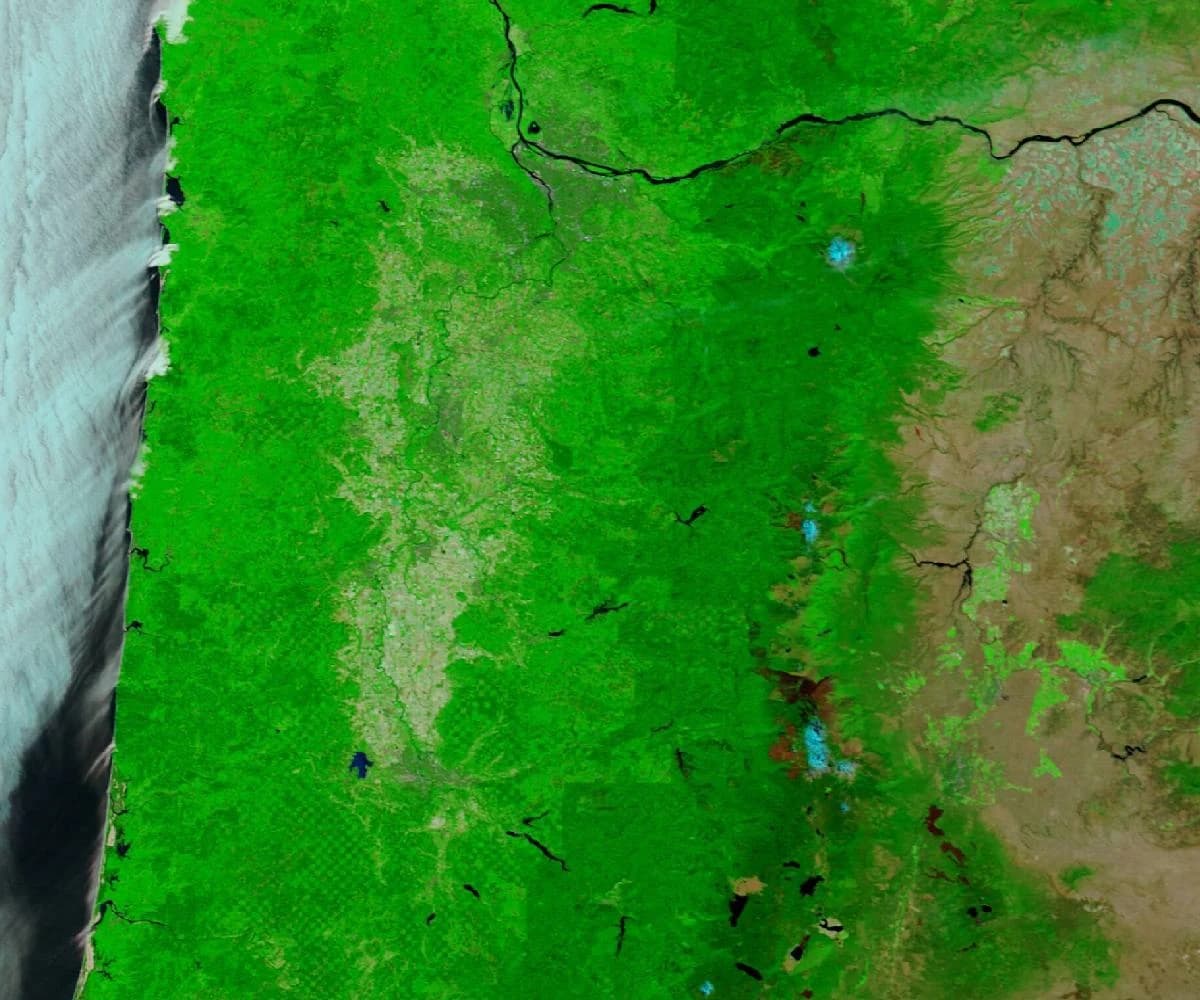 July 19, 2020 / before
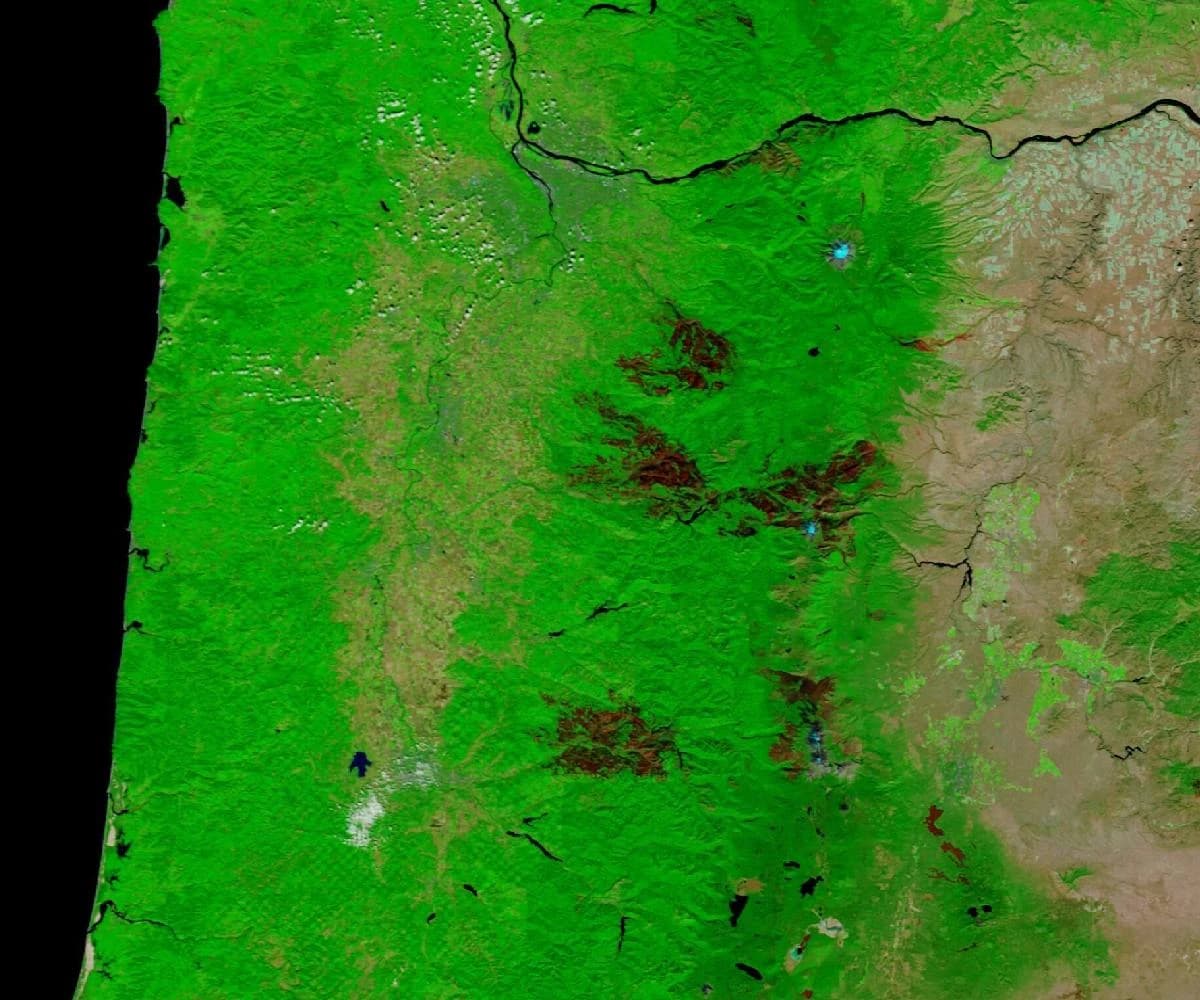 September 27, 2020 / after
Where was the event?
A perimeter may include ground that did not burn.
What changed?
Assessments describe effects using a particular method and date.
What came next?
Field visits show which trees, plants and habitat remain.
Explore the 2020 fire boundaries →Read Egley’s one- and nine-year observations →
Read three layers together: where the fire was, what changed, and what happened later.
Once we know which outcomes matter, we can ask what reaching them costs.
What does spending ahead buy us?
Preventive work costs money now, and keeping it effective can require more work later. A future wildfire may or may not reach the treated area. If it does, changed fire effects may reduce some losses or make response easier. Ecological benefits can also occur without a later wildfire.
A fair comparison puts feasible choices in the same place over the same period. It separates actual spending from possible savings, and asks who pays for the work, who experiences the smoke, and who receives the benefits.
When could spending now pay off later?
Imagine a project that makes a later wildfire less damaging. Its financial benefit depends on whether that fire reaches the project while the work is still effective.
20% × $10M = $2M
With these assumptions, expected avoided damage is $1M above the cost of the work.
We multiply the chance of a fire by the damage avoided if it happens. This averages possible futures. The actual outcome could be no wildfire, or a fire with a much larger benefit.
What a real comparison would need
Verified costs, local wildfire probabilities, evidence of treatment effects, maintenance schedules, and a common time period. This simple example leaves out the timing of money, treatment risks, smoke, firefighting costs, and ecological benefits. It cannot establish actual savings or whether a specific project is worthwhile.
Research on treatment encounters and possible savings ↗Compare the full choices over time: initial work, upkeep, response and consequences.
These choices are made by people and institutions. The last step is finding the decisions that matter where you live.
There is work to do at every scale.
On the landscape, managers choose habitat and fuel objectives. Around buildings, people can reduce vulnerabilities to embers and nearby flames. Communities plan for smoke, emergency communication and evacuation. Firefighters respond to the conditions that actually occur.
Those efforts fit together. Start with a place you know: its vegetation, land managers, nearby projects and community plan. Ask what the work is intended to change, how it is funded, and what observations will show whether it helped.
Manage habitat and fuel objectives.
Reduce routes for embers and flames to cause ignition.
Plan for response, smoke and evacuation.
The goal is a place better prepared for fire, with outcomes we can explain and check.
You now have the questions to bring to the records. Choose a place and investigate the evidence below.
Bring these questions to a place you know.
Why was this place chosen? What was planned? What actually happened? What did it cost? And what do the observations tell us afterward?
Explore the records
Loading source coverage for the atlas… The guide above is ready to read.