
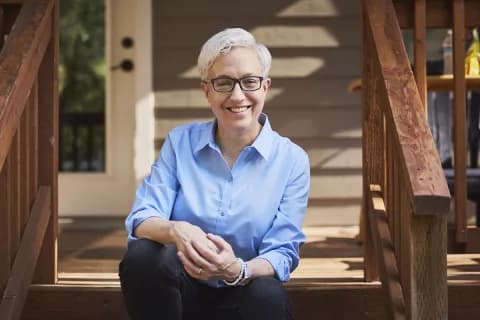
Governor candidate · State of Oregon · November 3, 2026
Tina Kotek
Incumbent governor; former Oregon House speaker.
Reach the campaign
- tinafororegon.com (opens in a new tab)
- info@tinafororegon.com
- (971) 385-0565
- Facebook (opens in a new tab)
- X (opens in a new tab)
- Instagram (opens in a new tab)
As published in their pamphlet statement and campaign site.
Campaign finance: sources, amounts and timing ↓
In their words
Said: Tina Kotek has never been satisfied with the status quo. She started her career at Oregon Food Bank because she believes no one should go hungry.
Voters’ pamphlet
Candidate statement · Filed for the November 2026 pamphlet; posted by the Secretary of State September 9, 2026; extracted September 21, 2026
Oregon voters’ pamphlet candidate statement · PDF page 33 ↗Verbatim opening of the candidate's own statement; publication by the state does not verify the claims. Skipped before it: the slogan “Fighting for Us. Always.” (no predicate). The first sentence is under 12 words, so the first two are shown.
The verbatim opening of their voters’ pamphlet statement, the same rule for every candidate. We chose nothing.
What they say they would do
Our summary of their platform, in our wordsHer September 2026 platform proposes expanded childcare and housing access, more classroom time, and economic development organized around existing businesses and emerging industries.
- Develop a path toward universal preschool and expand infant and toddler care.
- Pause new data-center development until statewide standards protect ratepayers and require clean energy and union jobs.
- Increase instructional time and support renters and first-time buyers.
Our reading
Our interpretation, not their wordsUniversal preschool, more classroom time and faster housing production all need recurring money; the reviewed platform sets goals and conditions but not the budget that pays for them or what would be reduced.
Where they stand
Housing and homelessness
Faster homebuilding- What
Would expand housing options for renters and first-time buyers, cut red tape to speed new construction, and increase starter-home development and down-payment assistance.
- How
- Said: Cut red tape to expedite construction, expand starter-home development and down-payment assistance programs, and set enforceable statewide permitting timelines.
- Measured by
- Said: Points to housing starts up 11.3% (outpacing the nation, she says), more than 6,200 shelter beds and nearly 26,000 households kept housed as the results so far; no second-term target is stated.
Crime, drugs and who responds
No ICE detention sites- What
Opposes ICE detention facilities in Oregon and the use of automated license-plate readers or cameras for immigration enforcement, cites blocking a National Guard deployment in Portland, and would keep expanding mental-health and addiction treatment capacity.
- How
- Said: Bar automated license-plate readers and cameras from immigration enforcement, oppose ICE detention facilities, direct state agencies to uphold sanctuary protections, and grow the behavioral-health workforce.
- Measured by
- Said: Cites more than 1,660 new treatment beds, a 45% increase in adult treatment capacity, as the result so far; no target for the next term is named.
Taxes, the kicker and the budget
Paid-for tax relief- What
Wants a tax system that is “adequate and fair”: would start with Prosperity Council ideas such as a larger research-and-development credit and a Corporate Activity Tax change for smaller businesses, paid for by trimming tax provisions that haven’t made Oregon more competitive rather than opening a hole in the budget, and wants a broader tax review led by an outside party.
- How
- Said: Start with Prosperity Council ideas, such as a larger research-and-development credit and a Corporate Activity Tax change for smaller businesses, offset by trimming tax provisions that haven’t made Oregon more competitive; then an outside-led tax review.
- Measured by
- Not found in the reviewed sources
Roads, energy and climate
Pause new data centers- What
Would maintain the commitment to a clean-energy future and invest in climate resilience, and supports a moratorium on new data centers until statewide standards prevent rate hikes, require clean energy and protect air and water.
- How
- Said: A bill on the first day of a second term requiring data centers to produce clean energy, be built with union labor, provide community benefits and treat workers fairly, as she described it at the October 1 debate.
- Measured by
- Said: A goal to protect 10% more of Oregon's most climate-resilient lands and waters over the next decade; no emissions or rate target is stated.
The choices this office faces
Every candidate in this race is asked the same 13 questions. Tina Kotek is on record on 13. A question without an answer is a research gap, not a position.
On recordRaise the gas tax and vehicle fees again to fund roads, after voters repealed the 2025 package?
Said: Called the 2025 special session and signed HB 3991’s gas-tax and fee increases; in January 2026 asked lawmakers to repeal it, and after voters did she pledged bipartisan work on a 2027 package.
Let the state hold back part of a kicker refund for other uses?
Said: Told reporters in May 2025 she would support withholding about $1 billion of the $1.64 billion kicker, one time and from high earners, for wildfire costs; her office later proposed Rainy Day Fund money instead.
Pause new data centers statewide until standards are set?
Said: Said at the October 1, 2026 debate there “has to be a moratorium on new development of data centers” until the state gets it right, and she will introduce a bill on day one setting rules for them.
Should data centers pay a separate, higher electricity rate (the 2025 POWER Act)?
Said: Signed HB 3546 on June 16, 2025; her office credits it with a 29% rate increase on data-center corporations and rate decreases for other PGE customers.
Keep the state homelessness emergency and its state-funded shelter beds going?
Said: Extended the homelessness emergency by Executive Order 26-01 through January 10, 2027, with goals of rehousing 1,400 more households and preventing homelessness for 8,000, after signing HB 3644’s $204.9 million shelter program.
Keep the Climate Protection Program's declining cap on fuel emissions?
Said: Said at the October 1, 2026 debate she is “100% supportive” of the program and supports the Legislature taking up next year how to align with Washington, California and Quebec; until then, she said, it stays.
Keep Oregon's vote-by-mail elections as they are?
Said: Said at the October 1, 2026 debate that vote by mail, used in Oregon for more than 25 years, “is trusted” and “convenient,” and urged voters to read the 2025 bill to return to polling places.
Keep Oregon's sanctuary-law limits on helping federal immigration enforcement?
Said: Created an interagency council on the state’s response to federal enforcement (EO 26-04, January 30, 2026), signed eight immigrant-protection bills April 9, 2026, and opposes ICE detention facilities in Oregon.
Require districts to keep and add classroom hours even when budgets are short?
Said: Executive Order 26-06 directs the state to prioritize rules stopping further budget-driven cuts to class time, requires districts that cut time to plan its restoration, and ends most waivers below the minimum.
Raise new state taxes to cover the 2027–29 budget gap, or hold to cuts?
Said: Open to raising the Corporate Activity Tax threshold for small businesses if trimming tax breaks that haven’t helped competitiveness pays for it; wants an outside-led tax review; did not say whether she would seek new taxes.
On the topic; the exact choice is unsaid.
Build the Interstate Bridge replacement as planned, with tolls, or scale it back?
Said: With Washington's governor, said March 17, 2026 the states remain “fully committed” to replacing the bridge, starting with a substantially funded core set of projects and adding the rest when funding is identified.
Keep the farmworker overtime schedule, which drops to 40 hours a week in 2027?
Said: Said at the October 1, 2026 debate it is “fair and moral” that people who work hard in the fields get paid overtime, and that supporting farms does not mean overlooking it.
Keep unemployment benefits for workers on strike, public employees included?
Said: Signed SB 916 in June 2025; said at the October 1, 2026 debate she stands with union workers “when they are out on strike, making sure that they can put food on the table.”
A question the evidence leaves open
How would the next budget pay for childcare and school expansion, and what would be reduced or taxed to do so?
Sources (5)
- Kotek · second-term platformCandidate statement · Released September 17, 2026; reviewed September 18
- 2026 qualified filing · DemocratElection authority · Checked September 18, 2026
- 2026 qualified filing · Working FamiliesElection authority · Checked September 18, 2026
- Oregon voters’ pamphlet candidate statement · PDF page 33Candidate statement · Filed for the November 2026 pamphlet; posted by the Secretary of State September 9, 2026; reviewed September 21, 2026Campaign position. Claimed results and numerical premises have not automatically been independently verified.
- Oregon Business & Industry and Portland Business Journal · governor candidate forum (September 24, 2026)Candidate statement · September 24, 2026; transcript read September 25, 2026The candidate's own remarks at a public forum, read from a transcript; speaker attribution is the Lab's, from the moderator's order. Claims are not independently verified.